
Captcha data collection refers to the process where CAPTCHA systems gather data from user interactions to verify humanity and prevent automated abuse. This data typically includes interaction patterns, risk signals, and validation tokens that help distinguish real users from bots. Understanding how captcha data collection works, what data is gathered, and how it is used is crucial for developers and security teams implementing bot defenses on their websites or apps.
What Is Captcha Data Collection?
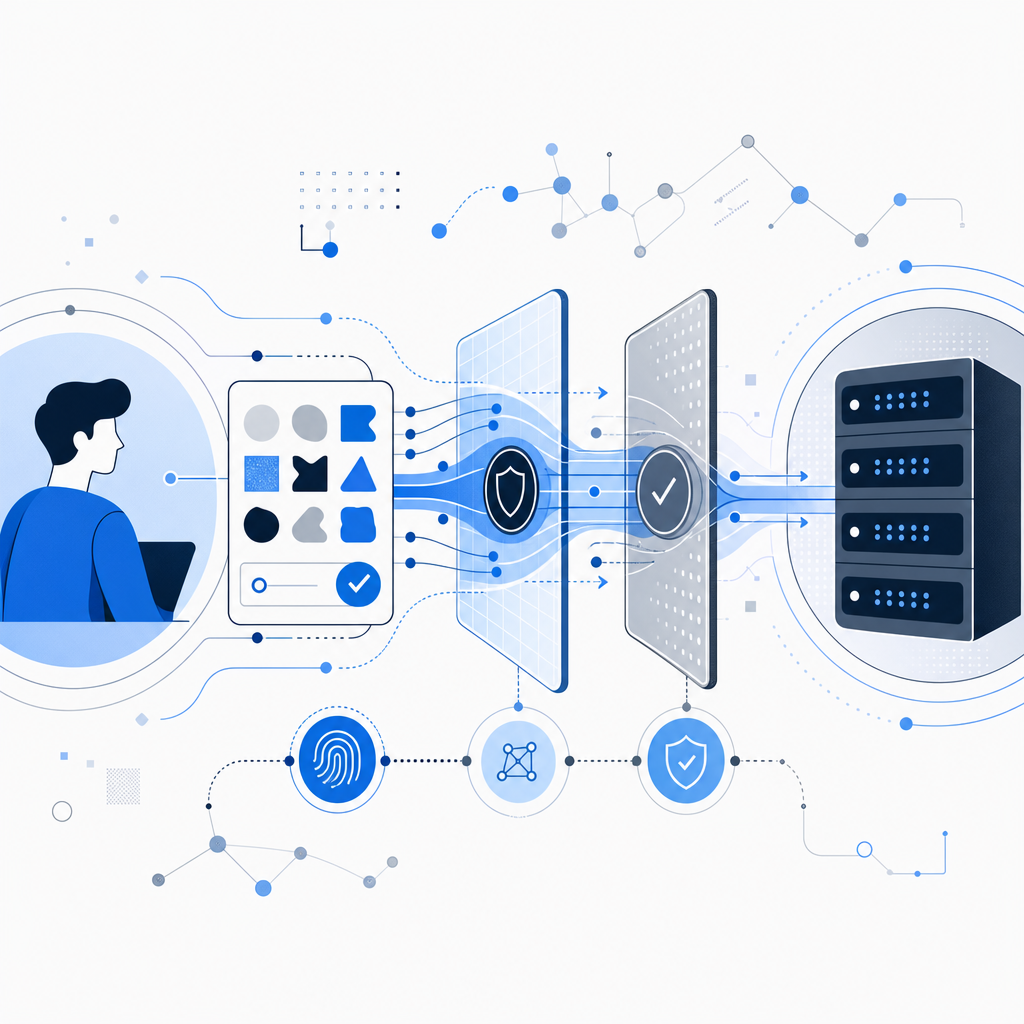
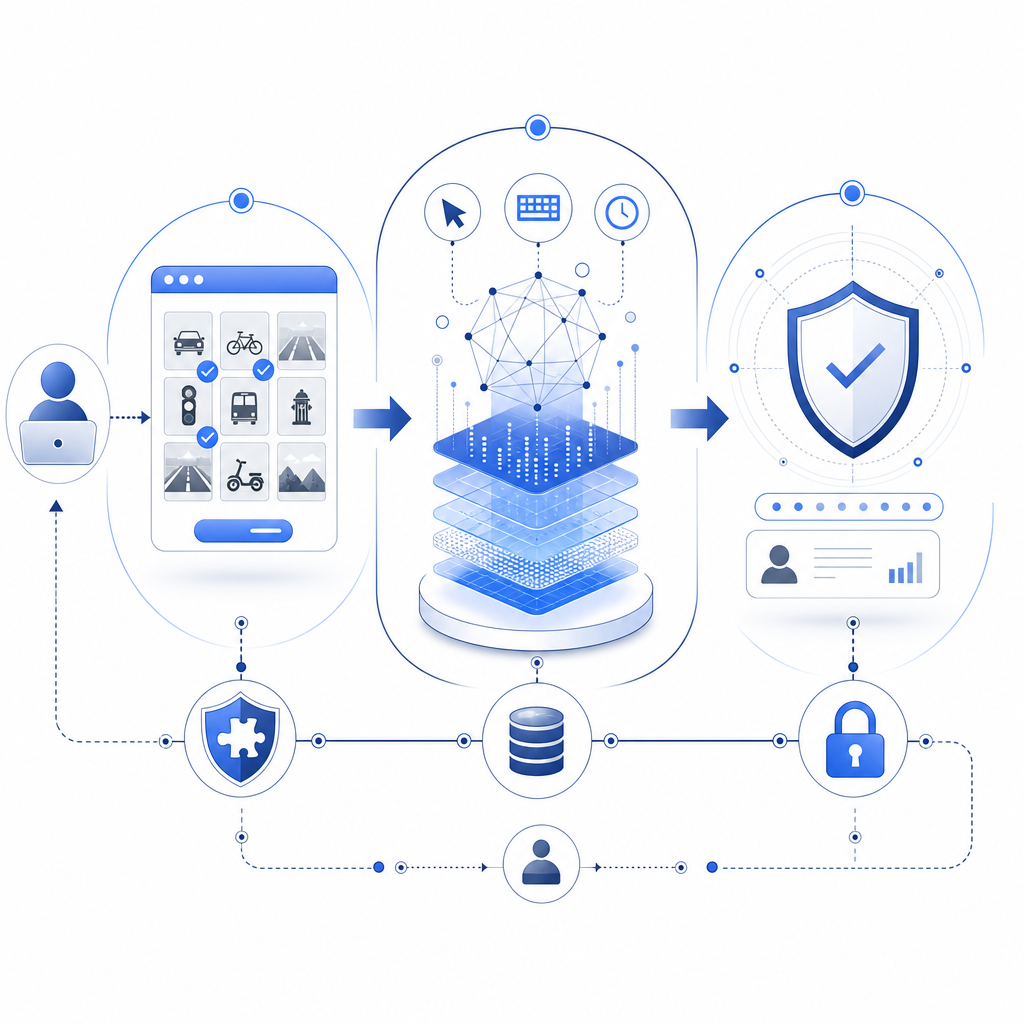
At its core, captcha data collection involves capturing behavioral and contextual information when users solve CAPTCHA challenges. This can range from simple mouse movements and keystrokes to more complex environmental data like browser fingerprints or IP addresses. The goal is to analyze this input in real-time or via server validation to confirm that a request originates from a legitimate human rather than an automated script.
Traditional CAPTCHAs—such as distorted text or image recognition—implicitly collect interaction data as users complete challenges. More modern CAPTCHA solutions incorporate invisible or user-friendly tests that run passively and collect richer behavioral cues without disrupting the user experience. This data helps discern subtle differences in behavior that bots typically cannot mimic consistently.
Key Data Points Captcha Systems Collect
Captcha data collection is not limited to just the answers input by users but often includes a variety of signals:
- Interaction Timing: How long it takes to solve the challenge, including delays between steps.
- Cursor Movements: Mouse trajectories or touchscreen gestures.
- Device Attributes: Browser type, version, language, screen resolution.
- Network Data: IP address, geolocation, and connection metadata.
- Challenge Response Tokens: Encrypted tokens issued after verification for backend validation.
These data points support multiple verification layers that go beyond static challenges, increasing reliability in detecting and blocking malicious bot activity.
Privacy Considerations in Captcha Data Collection
Since CAPTCHA involves collecting user data, respecting privacy is essential. Leading providers, including CaptchaLa, emphasize first-party data collection that minimizes exposure to third parties and complies with privacy regulations like GDPR and CCPA. Data usage is focused strictly on bot detection and not on profiling or third-party advertising.
Some CAPTCHA services like reCAPTCHA are known for integrating extensive tracking scripts which may raise privacy concerns due to linking data with broader Google accounts and services. Alternatives such as hCaptcha and Cloudflare Turnstile offer varying approaches, with Cloudflare Turnstile aiming for minimal data collection and no user friction.
CaptchaLa, for example, provides SDKs for multiple platforms (Web, iOS, Android, Flutter, Electron) and ensures data collected purely serves validation purposes, providing transparency through its documentation.
How Captcha Data Collection Strengthens Bot Defense
The value of captcha data collection lies in enabling adaptive, accurate bot defense mechanisms. Using multi-dimensional data signals, it becomes easier to detect advanced automated attacks such as credential stuffing, scraping bots, and spammers that try to bypass traditional CAPTCHAs.
A simplified comparison of how captcha providers handle data collection and validation might look like:
| Feature | CaptchaLa | reCAPTCHA | hCaptcha | Cloudflare Turnstile |
|---|---|---|---|---|
| Data Collection | First-party only, limited | Extensive, 3rd party links | First-party, privacy-focused | Minimal, privacy-first |
| Validation Mode | Token + server-side API | Token + server validation | Token + server validation | Token + lightweight verification |
| User Experience | Customizable UI, 8 languages | Varied challenges, sometimes intrusive | Customizable, UI varied | Invisible or simple challenges |
| SDK Support | Web, iOS, Android, Flutter, Electron | Primarily Web + Mobile SDKs | Web + Mobile SDKs | Lightweight Web SDK only |
| Pricing Model | Free tier, scalable plans | Free, but with usage caps | Usage-based, paid tiers | Free for Cloudflare customers |
This comprehensive data gathering and verification process enables security teams to balance user friction and bot challenge toughness while maintaining performance.
Implementing CaptchaLa for Secure Data Collection
CaptchaLa offers server and client SDKs for easy integration into diverse tech stacks. Example of a basic server-side validation call in PHP might look like:
// PHP example: Validate user's CAPTCHA token with CaptchaLa API

$client_ip = $_SERVER['REMOTE_ADDR'];
$pass_token = $_POST['pass_token'];

$api_key = 'your_app_key';
$api_secret = 'your_app_secret';
$url = 'https://apiv1.captcha.la/v1/validate';

$data = json_encode(['pass_token' => $pass_token, 'client_ip' => $client_ip]);

$options = [
    'http' => [
        'header' => "Content-Type: application/json\r\nX-App-Key: $api_key\r\nX-App-Secret: $api_secret\r\n",
        'method' => 'POST',
        'content' => $data,
    ],
];

$context = stream_context_create($options);
$result = file_get_contents($url, false, $context);
$response = json_decode($result, true);

if ($response && $response['success']) {
    // Proceed with validated human user
} else {
    // Block or challenge again
}
This example highlights how collected data (pass_token and IP) is securely verified without excessive user disruption, improving bot filtering with each request.
Conclusion: Why Captcha Data Collection Matters
Effective captcha data collection is critical to maintaining secure and user-friendly bot defense systems. By capturing relevant signals—ranging from interaction behavior to device info—services can accurately identify illegitimate traffic while minimizing legitimate user friction. Providers like CaptchaLa balance thorough data-driven validation with privacy-first policies, supporting developers in integrating fair, transparent CAPTCHA solutions.
Tools like CaptchaLa also offer multi-platform support, thorough documentation, and scalable pricing tiers to suit projects from small sites to enterprise applications. Understanding captcha data collection enables you to choose and implement CAPTCHA solutions that protect your application without compromising user experience or privacy.
To learn more about how CaptchaLa handles data collection, validation, and integration, check out our detailed docs or explore our pricing plans.
Where to go next? Dive deeper into CaptchaLa’s API and SDK options and see how to get started with bot protection today.