
An anti bot system identifies automated traffic and blocks or challenges it before it can harm signups, logins, checkout flows, or APIs. The core idea is simple: collect low-friction signals, score them quickly, and only escalate when behavior looks suspicious.
That sounds straightforward, but the real work is in balancing accuracy, speed, and user experience. A system that is too strict frustrates real users; one that is too lenient leaves you exposed to spam, credential stuffing, scraping, and fake account creation. The best setups combine client-side challenge logic, server-side verification, and application-specific rules rather than relying on a single signal.
What an anti bot system actually does
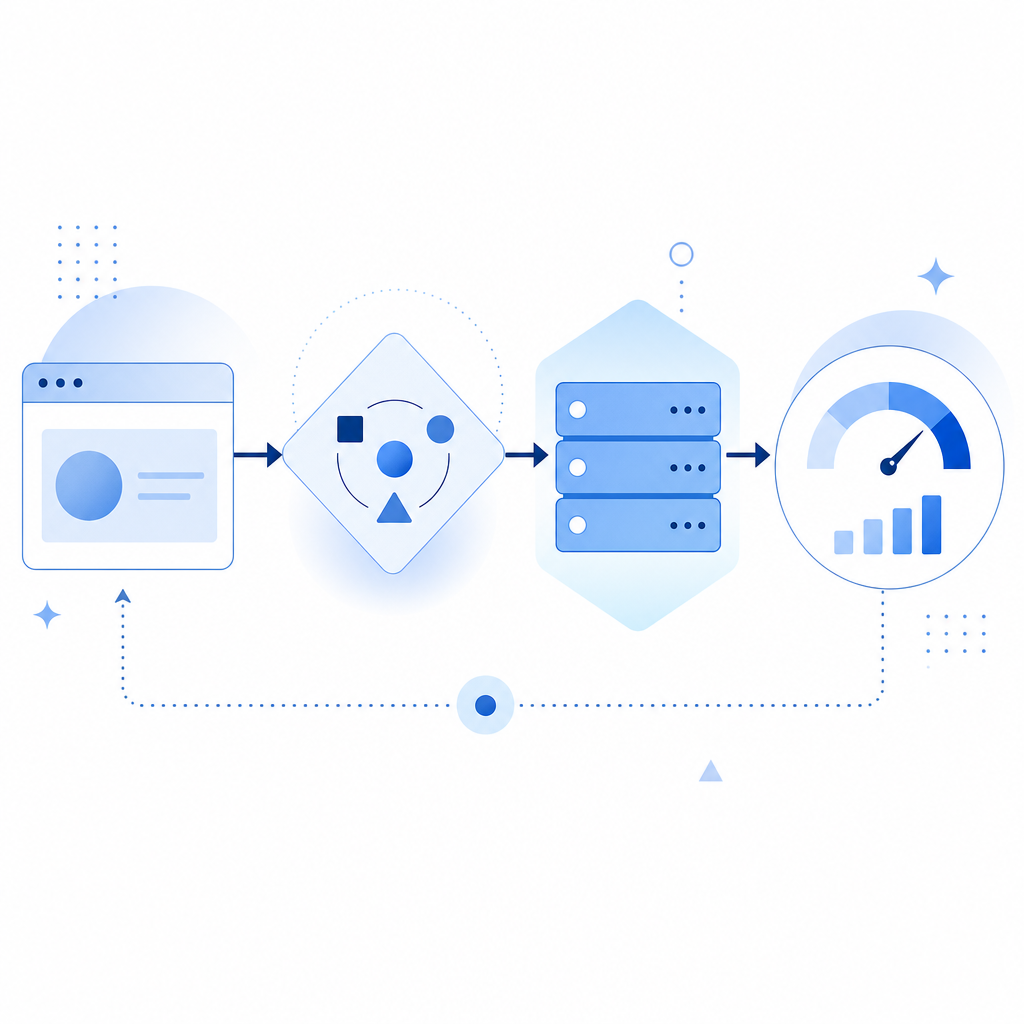
At a high level, an anti bot system sits between your user and the action you care about: sign-up, login, password reset, form submission, or API request. Its job is to answer one question fast: does this interaction look like a human session, or should it be challenged, rate-limited, or blocked?
Most systems use a layered decision path:
Observe the request context
This includes IP reputation, ASN, geolocation mismatch, request velocity, device/browser traits, cookie continuity, and whether the client can execute the required JavaScript or mobile SDK checks.Issue a challenge or token
If the session looks normal, the client gets a token or a lightweight pass. If the session is uncertain, the system may render a puzzle, proof-of-work style step, or a hidden integrity check.Validate on the server
Your backend verifies the token with the anti bot provider before accepting the request. This prevents a client from simply forging success locally.Apply policy
The app can allow, deny, throttle, step-up authenticate, or route to manual review depending on the risk score and business rules.
A practical anti bot system should be invisible to most legitimate users. If users constantly see challenges, your friction is too high. If you never see suspicious traffic, your detection may be too shallow.
Signals matter more than a single widget
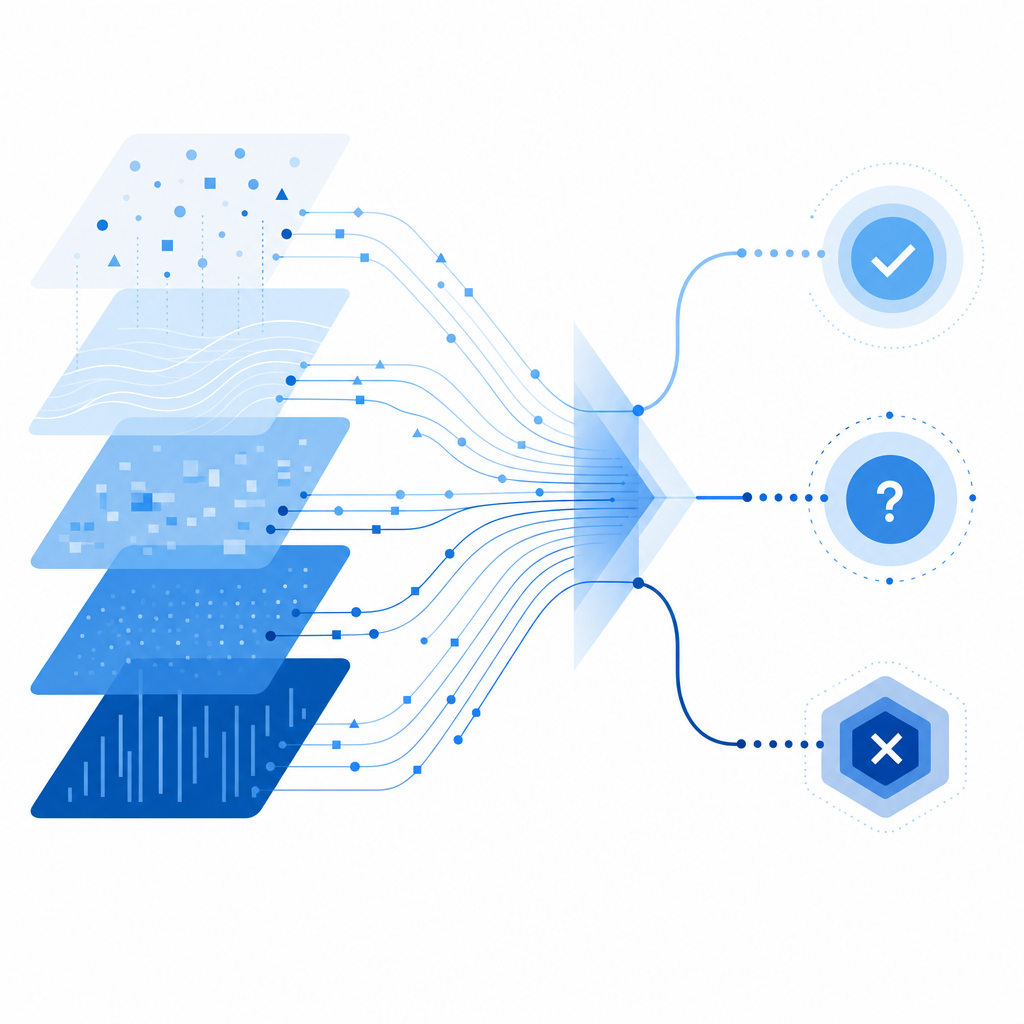
Many teams think of anti-bot as a widget dropped into a page. In reality, effective bot defense is a signal fusion problem. The strongest systems combine multiple weak indicators rather than betting on one dramatic test.
Common signals include:
- Request rate and burst patterns
- IP and subnet reputation
- Browser execution integrity
- Cookie persistence across sessions
- Header consistency and timing
- Form completion speed and navigation sequence
- Device fingerprint stability, where appropriate and privacy-respecting
- Reuse of the same token or session artifact
A useful way to think about it is: bots are usually optimized for scale, while humans are optimized for variance. Humans pause, mistype, switch tabs, and navigate inconsistently. Bots often repeat patterns with machine precision, even when they try to mimic real users.
Where anti bot systems fail
False positives are the expensive side of bot defense. Common causes include:
- Aggressive rules on shared networks or mobile carriers
- Blocking users behind privacy tools, corporate proxies, or VPNs
- Overweighting one signal like IP reputation
- Requiring too much friction for low-risk actions
False negatives are just as risky:
- Only checking the frontend and skipping server validation
- Allowing token reuse
- Trusting client-side flags without integrity checks
- Not correlating request velocity across endpoints
If your business needs low-friction protection, look for a system that lets you tune sensitivity by route, action type, and risk level. CaptchaLa, for example, supports web and mobile SDKs plus server verification so teams can keep the decision on the backend instead of trusting the browser alone.
Comparing common bot-defense options
There are several recognizable names in this space, and the differences are mostly in integration style, signal philosophy, and operational trade-offs.
| Option | Typical strength | Common trade-off | Good fit |
|---|---|---|---|
| reCAPTCHA | Familiar UX, broad adoption | Can feel more intrusive depending on configuration | Teams wanting a widely recognized approach |
| hCaptcha | Strong abuse protection focus | May require more user interaction in some flows | Sites prioritizing challenge-based defense |
| Cloudflare Turnstile | Low-friction experience | Usually fits best when Cloudflare is already part of the stack | Teams already using Cloudflare services |
| CaptchaLa | Multi-platform SDKs, server validation, first-party data only | Requires integrating client and server pieces like any serious defense layer | Apps wanting application-level control across web and mobile |
This is not about “good” versus “bad.” The right choice depends on your architecture, traffic patterns, and privacy requirements. For example, if your product spans web, iOS, Android, Flutter, and Electron, a provider with native SDKs across those surfaces can simplify maintenance. CaptchaLa supports Web (JS, Vue, React), iOS, Android, Flutter, and Electron, plus server SDKs for PHP and Go, which helps keep enforcement consistent across clients.
A few implementation details are worth noting if you are evaluating a provider:
- Web loader delivery should be lightweight and stable. CaptchaLa’s loader is available via
https://cdn.captcha-cdn.net/captchala-loader.js. - Server validation should be explicit and simple. For CaptchaLa, validation is done with a
POSTtohttps://apiv1.captcha.la/v1/validateusing{pass_token, client_ip}andX-App-Key/X-App-Secret. - Challenge issuance should support server-side control. CaptchaLa exposes
POST https://apiv1.captcha.la/v1/server/challenge/issuefor server-token flows. - Localization matters. An anti bot system that ships in multiple UI languages reduces friction for global users.
How to implement one without overengineering it
You do not need a sprawling fraud platform to get meaningful protection. Start with the highest-risk endpoints and expand from there.
Here is a sensible rollout plan:
Protect account creation first
Signup abuse is easy to measure and easy to weaponize. Add protection to registration, email verification, and invite flows before anything else.Add server validation on every protected action
Never accept a challenge result only from the browser. Your backend should verify the pass token and client IP before creating state.Scope rules by route
A login endpoint and a newsletter form should not share the same thresholds. Set different policies for each.Use step-up controls, not just blocks
For borderline cases, require email verification, OTP, or a temporary cool-off instead of outright denial.Log the decision path
Keep records of why a request was allowed or challenged. That makes tuning much easier.
A basic verification flow can look like this:
// English comments only
async function verifyCaptcha(passToken, clientIp) {
  const response = await fetch("https://apiv1.captcha.la/v1/validate", {
    method: "POST",
    headers: {
      "Content-Type": "application/json",
      "X-App-Key": process.env.APP_KEY,
      "X-App-Secret": process.env.APP_SECRET
    },
    body: JSON.stringify({
      pass_token: passToken,
      client_ip: clientIp
    })
  });

  if (!response.ok) {
    throw new Error("Captcha validation failed");
  }

  const result = await response.json();

  if (!result.success) {
    throw new Error("Bot check not passed");
  }

  return result;
}
The important part is not the snippet itself; it is the discipline behind it. The browser can present the challenge, but the backend makes the final call.
If you are evaluating deployment cost, some teams start on a free tier and scale only when volume demands it. CaptchaLa’s published plans include a free tier at 1,000 monthly requests, Pro at 50K-200K, and Business at 1M, which is a reasonable way to test real traffic before committing.
Choosing the right anti bot system for your app
When comparing providers, prioritize operational fit over marketing language. Ask these questions:
- Can I validate on my server, not just in the browser?
- Does it work across the platforms I actually ship?
- Can I adjust policy by endpoint and risk?
- How much user friction does the normal path add?
- What data is collected, and does it align with my privacy posture?
- Will it still be maintainable six months from now?
If you want a system that is straightforward to embed in modern apps, CaptchaLa’s docs are the place to start. If you are still estimating volume or trying to map costs to traffic, the pricing page gives a clean view of the current tiers.
An anti bot system is most effective when it feels boring: predictable to integrate, hard to abuse, and quiet for real users. That is the goal.
Where to go next: read the docs for implementation details, or check pricing to plan a rollout that matches your traffic.