
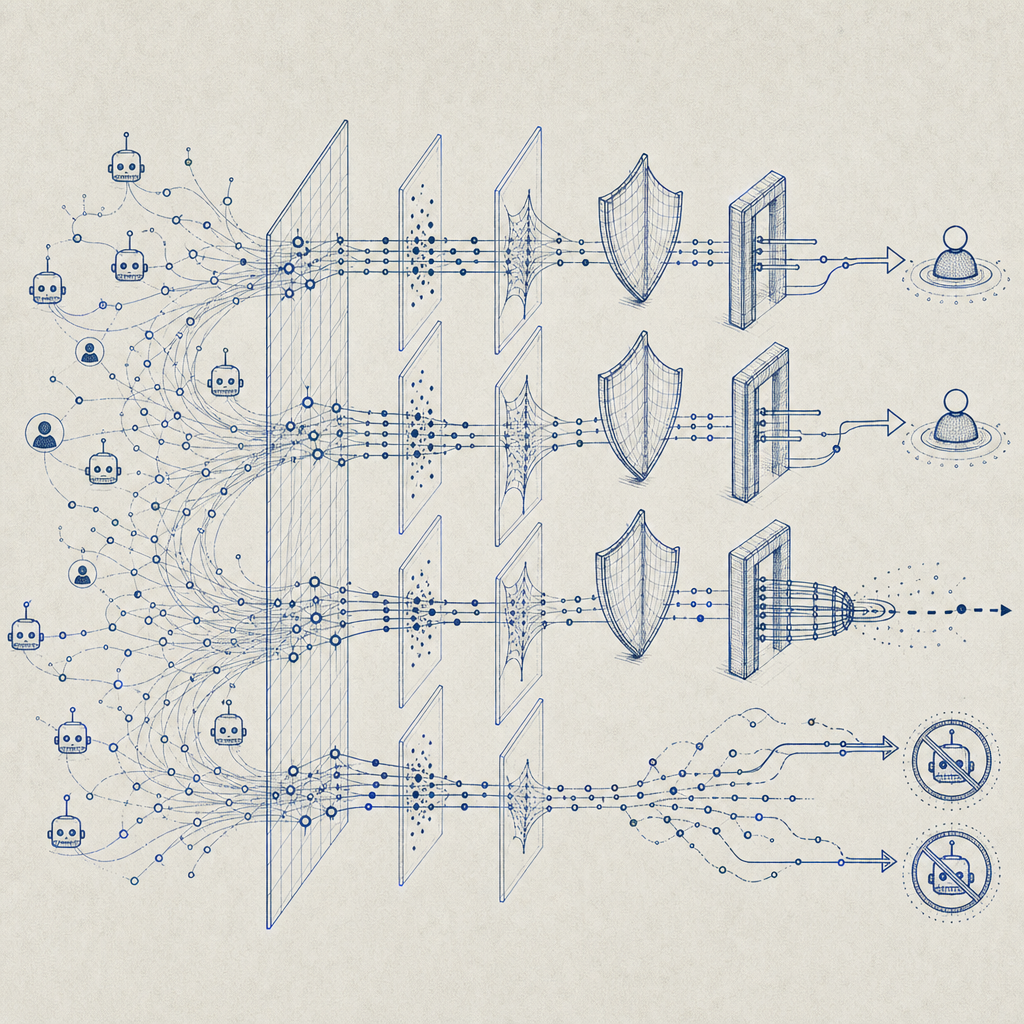
An anti bot service prevents malicious automated traffic from harming websites and apps by identifying and blocking bots while allowing real users through. These services use various detection techniques—like behavior analysis, challenge-response tests, and client fingerprinting—to distinguish bots from humans. For any business with an online presence, employing an anti bot service is essential to guard against spam, fraud, credential stuffing, scraping, and other forms of bot abuse that degrade security and user experience.
What Exactly Does an Anti Bot Service Do?
An anti bot service acts as a gatekeeper for your website’s incoming traffic. Its primary function is to identify automated, non-human sources that try to perform harmful activities such as:
- Automated form spam or fake account creation
- Credential stuffing using leaked passwords
- Price scraping and competitive data theft
- Distributed denial of service (DDoS) attacks
- Skewing analytics and fraudulent clicks
Once detected, these illegitimate requests can be blocked, challenged, throttled, or flagged for further investigation. The goal is to reduce friction for genuine users while minimizing bot-driven abuse that drives up operational costs and damages trust.
Common Methods of Bot Detection
Anti bot services combine multiple techniques for robust detection:
- Behavioral Analysis: Monitoring mouse movements, keystrokes, and navigation patterns that differ from typical human actions.
- Device and Browser Fingerprinting: Collecting parameters like user agent, canvas fingerprints, or hardware characteristics to identify suspicious environments.
- Challenge-Response Tests: Using CAPTCHAs or puzzles that are trivial for humans but hard for bots to solve.
- Rate Limiting and IP Reputation: Detecting unusual request frequency or recognizing known malicious IP addresses.
Comparing Popular Anti Bot Services
Here’s a comparison of the features offered by CaptchaLa and some other well-known anti bot providers:
| Feature | CaptchaLa | reCAPTCHA | hCaptcha | Cloudflare Turnstile |
|---|---|---|---|---|
| Challenge Types | Various CAPTCHA styles, customizable | Image-based, audio | Image-based, audio | Invisible, minimal user friction |
| SDKs & Integration | JS, Vue, React, iOS, Android, Flutter, Electron; Server SDKs (PHP, Go) | JS-based, mobile SDKs limited | JS-based, some server-side | JS-based, minimal integration effort |
| Language Support | 8 UI languages | Multiple | Multiple | Limited |
| Pricing Model | Free tier 1,000/mo; Pro & Business plans | Free & Enterprise options | Mostly pay-per-use | Included with Cloudflare plans |
| Data Privacy | First-party data only | Google data usage | Third-party data involved | Cloudflare data policies apply |
| Challenge Experience | Traditional CAPTCHA & more | Standard image puzzles | Similar to reCAPTCHA | Less intrusive, frictionless |
Choosing the right service depends on your needs—whether you prefer open challenge styles or invisible friction, extensive SDK support, or tighter data privacy controls. CaptchaLa stands out for its multi-platform SDKs, privacy-first approach, and flexible pricing tiers suitable for both small projects and large enterprises.
Technical Overview: How to Implement an Anti Bot Service
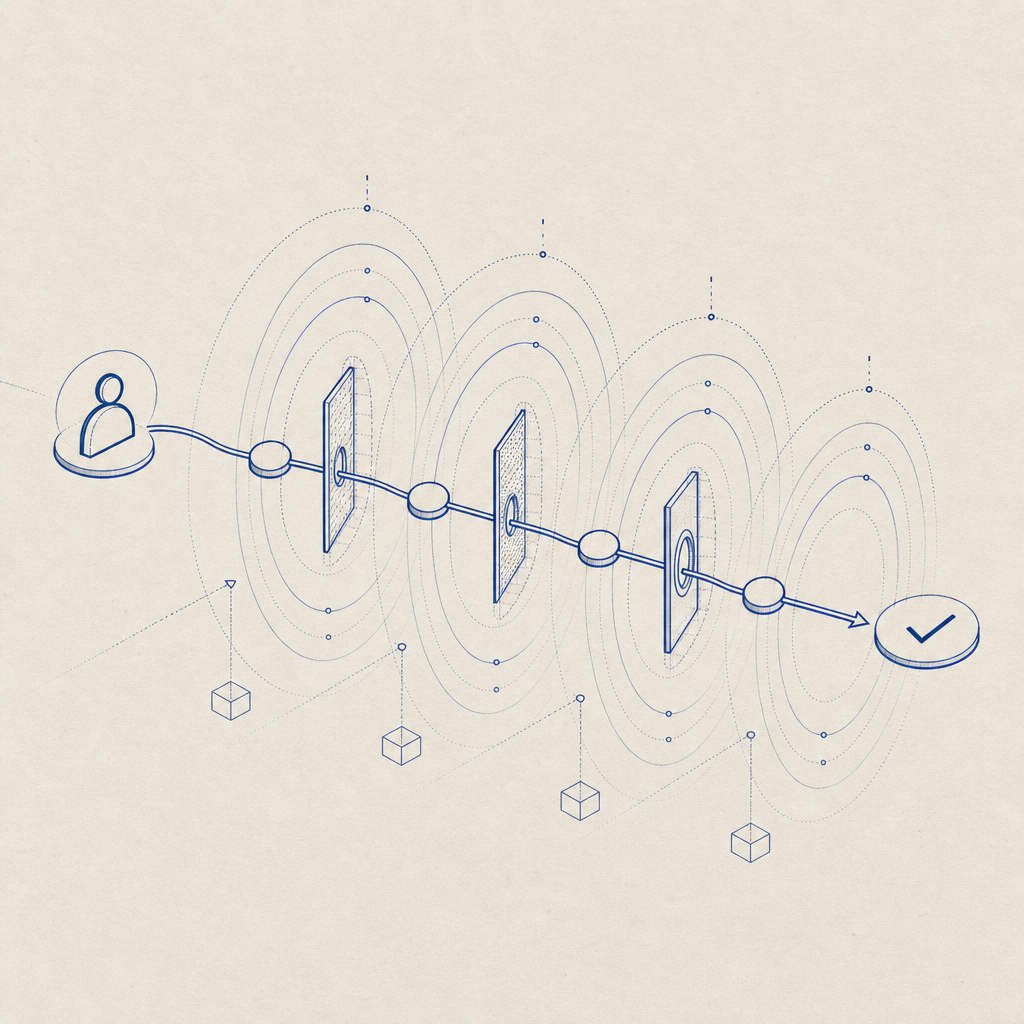
For developers integrating an anti bot service like CaptchaLa, the workflow involves both client-side and server-side components.
Steps to Integrate CaptchaLa
Load the Client SDK
Include the loader script in your webpage or app:html<script src="https://cdn.captcha-cdn.net/captchala-loader.js"></script>Render the CAPTCHA Challenge
The SDK supports rendering in various frameworks (React, Vue, etc.) with a few lines of code to display the CAPTCHA for suspicious visitors or all users depending on policy.Client-Side Token Generation
When users complete the challenge, apass_tokenis generated representing their verification.Server-Side Verification
Your backend calls the validation endpoint with the token and client IP to confirm legitimacy:httpPOST https://apiv1.captcha.la/v1/validate Headers: X-App-Key, X-App-Secret Body: { "pass_token": "<token>", "client_ip": "<ip-address>" }Respond Accordingly
- If valid, allow the user action (form submit, login, etc.)
- If invalid, block or require additional steps
With SDKs also available for PHP, Go, and mobile platforms, implementing consistent bot defense across your tech stack is straightforward.
Why Privacy and First-Party Data Matter
Some anti bot services rely heavily on sending user data to external providers, raising privacy concerns and compliance risks (e.g., GDPR). CaptchaLa takes a first-party data approach, meaning all challenge and validation traffic stays within your infrastructure’s control. This enhances user privacy and reduces exposure to third-party tracking.
Balancing Security and User Experience
A major challenge with anti bot services is balancing protection against bots without annoying real users. Some systems rely primarily on difficult image-based puzzles, frustrating users especially on mobile devices. Others leak more data to gain better intelligence but sacrifice privacy.
Services like CaptchaLa offer a variety of challenge types and language options to provide smoother experiences. Invisible challenges or behavior-based detection can reduce user friction. It’s important to tune your detection rules—for example, only triggering CAPTCHAs based on risk thresholds rather than for all visitors.
In Summary
An anti bot service is critical to defending your online property from malicious automated traffic. By combining multi-faceted detection techniques (behavior, fingerprinting, challenges), such services differentiate real users from bots. Choosing an anti bot platform with solid SDK support, flexible deployment options, and privacy-focused design can help deliver safer and smoother user experiences.
If you’re exploring options, look into the integrative platforms like CaptchaLa, which provide comprehensive bot defense without compromising user privacy. Their detailed documentation makes implementation manageable, whether you operate a small website or a large-scale app. For pricing details tailored to your usage, check out CaptchaLa’s pricing plans.
Strong bot defense is no longer optional—it is a fundamental step to protecting business value and user trust in the digital world.