
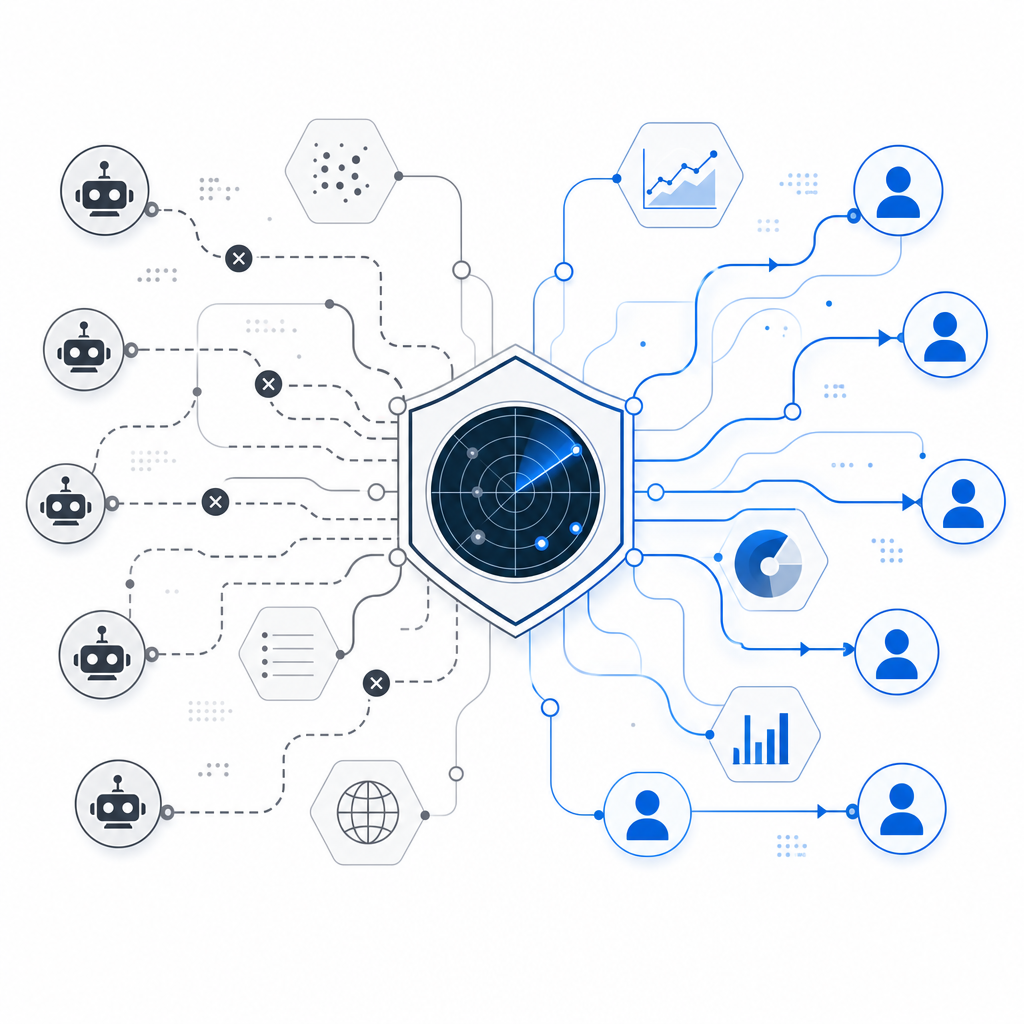
An anti bot raid is a defense mechanism designed to detect and block large-scale, coordinated automated attacks on websites or online services. These raids, typically launched by malicious scripts or botnets, aim to overwhelm or manipulate systems, often causing service disruptions, fraud, or data scraping. Effective anti bot raid measures identify suspicious traffic patterns and implement challenge-response tests or behavioral analysis to stop bots while preserving a smooth experience for legitimate users.
What Is an Anti Bot Raid and Why It Matters
Bot raids differ from everyday spam or isolated bot activity in their scale and intent. They often happen suddenly, flooding sites with thousands or millions of automated requests, leading to denial of service, fake account creation, or fraudulent transactions. For businesses, this can mean lost revenue, damaged reputation, and costly mitigation efforts.
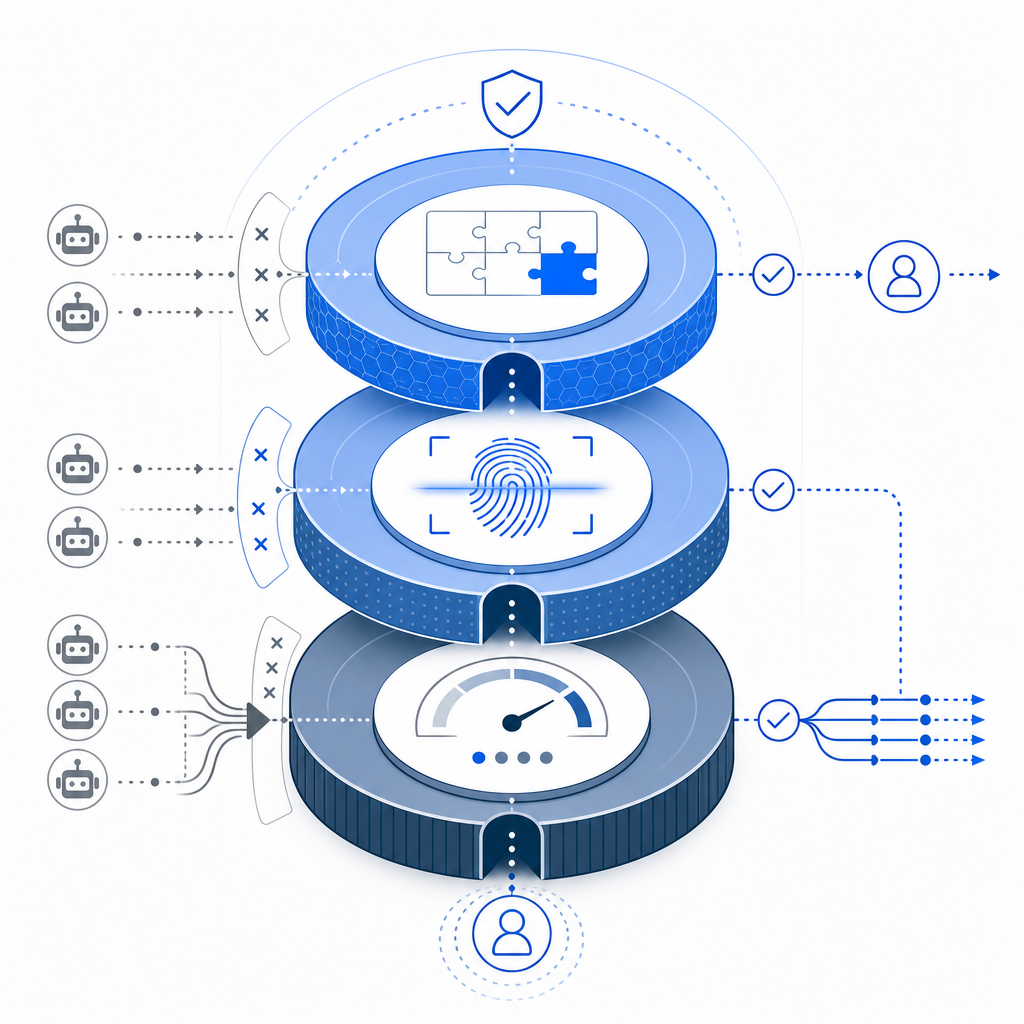
An anti bot raid solution doesn’t just block single requests; it continuously analyzes traffic rhythms, user behaviors, and interaction patterns to separate genuine human users from automated threats. This ongoing vigilance is crucial because bot authors adapt their tools to bypass simple defenses.
Key Technologies in Anti Bot Raid Protection
CAPTCHA Challenges
CAPTCHA tests remain one of the primary defenses against bot raids by requiring users to complete a task—like solving an image puzzle or typing distorted text—that’s easy for humans but challenging for automated scripts. Solutions like CaptchaLa offer multilanguage UI and optimized challenge flows to reduce user friction while still deterring bots.
Behavioral Analysis & Fingerprinting
More advanced anti bot raid systems use behavioral biometrics and browser fingerprinting to detect anomalies. For example, they might track mouse movements, typing speed, or interaction patterns that deviate significantly from normal human behavior. This approach helps flag sophisticated bots designed to mimic humans visually.
Rate Limiting and Traffic Filtering
Controlling the volume of incoming requests from suspicious IPs or user agents is another layer of defense. Rate limiting slows down or temporarily blocks traffic surges that often characterize bot raids. Filtering by geolocation or reputation scores can preemptively reduce attack vectors.
Integration of Server-Side Validation
A robust anti bot raid setup integrates client-side challenges with server-side verification. For instance, CaptchaLa’s APIs allow seamless validation of tokens generated by the client challenge, adding a secure confirmation that the request originated from a verified human interaction.
// Example of verifying a CAPTCHA token on server-side (Node.js syntax)
const axios = require('axios');
async function validateCaptcha(passToken, clientIp) {
  const response = await axios.post(
    'https://apiv1.captcha.la/v1/validate',
    { pass_token: passToken, client_ip: clientIp },
    { headers: { 'X-App-Key': 'your_app_key', 'X-App-Secret': 'your_app_secret' } }
  );
  return response.data.success; // true if human verified
}
Comparison of Popular Anti Bot Raid Solutions
| Feature | CaptchaLa | reCAPTCHA v3 | hCaptcha | Cloudflare Turnstile |
|---|---|---|---|---|
| Challenge Types | Image, text, interactive | Invisible, score-based | Image, text | Invisible, score-based |
| SDK Platforms | Web, iOS, Android, Flutter, Electron | Web, Android, iOS | Web, Android, iOS | Web only |
| Server-Side Verification | Yes | Yes | Yes | Yes |
| UI Languages | 8 | Several | Multiple | Limited |
| Pricing Model | Free tier + tiers based on requests | Free | Free with Enterprise plans | Part of Cloudflare suite |
| User Privacy Focus | First-party data only | Uses Google data | Independent | Cloudflare data |
Each tool has advantages: reCAPTCHA and Cloudflare Turnstile are well-established with broad adoption, while CaptchaLa emphasizes customizable UI and SDK support across many platforms, combined with a privacy-conscious, scalable pricing model.
Best Practices for Implementing Anti Bot Raid Defenses
Preventing bot raids is not about a single fix but a layered approach with constant tuning:
Customize Challenges Based on Risk
Use adaptive CAPTCHA difficulty. For low-risk users, invisible or no CAPTCHA is ideal. Increase challenge difficulty when suspicious signals are detected.Monitor Traffic Patterns Continuously
Real-time analytics help spot spikes and unusual behaviors early, enabling quick response.Integrate Seamlessly With Existing Infrastructure
Use SDKs and APIs (like those from CaptchaLa) to add bot defense without impacting site performance.Update and Rotate Keys Regularly
Maintain security hygiene on your validation endpoints by rotating credentials to avoid compromise.Educate Users About Bot Defense
Transparent communication reduces user frustration when they encounter a challenge during legitimate activity.
Final Thoughts on Anti Bot Raid Protection
Bot raids are evolving risks demanding intelligent, multi-layered defenses. Tools like CaptchaLa provide a balanced approach with robust challenge systems, SDK flexibility, and scalable pricing—important qualities alongside established options like reCAPTCHA or Cloudflare Turnstile. By tailoring defenses to user behavior and traffic context, organizations can reduce bot-driven abuse while maintaining smooth user experiences.
For websites and services aiming to fortify their security against automated attacks, reviewing your bot defense strategy with a focus on anti bot raid capabilities is essential. Explore your options, test different solutions in your environment, and prioritize user-friendly yet effective challenges.
Where to go next? For technical details, integration guides, and pricing tiers, visit CaptchaLa Pricing and the developer documentation.