
Anti bot proxy technologies play a crucial role in distinguishing legitimate users from automated malicious actors who try to bypass web security by routing traffic through proxy servers. An anti bot proxy identifies and mitigates suspicious requests coming from anonymized or shared IP addresses, helping websites and apps prevent fraud, scraping, fake signups, and other automated abuse. Understanding how these tools work and comparing options like CaptchaLa, reCAPTCHA, and others can help developers implement stronger bot defenses tailored to their needs.
What Is an Anti Bot Proxy?
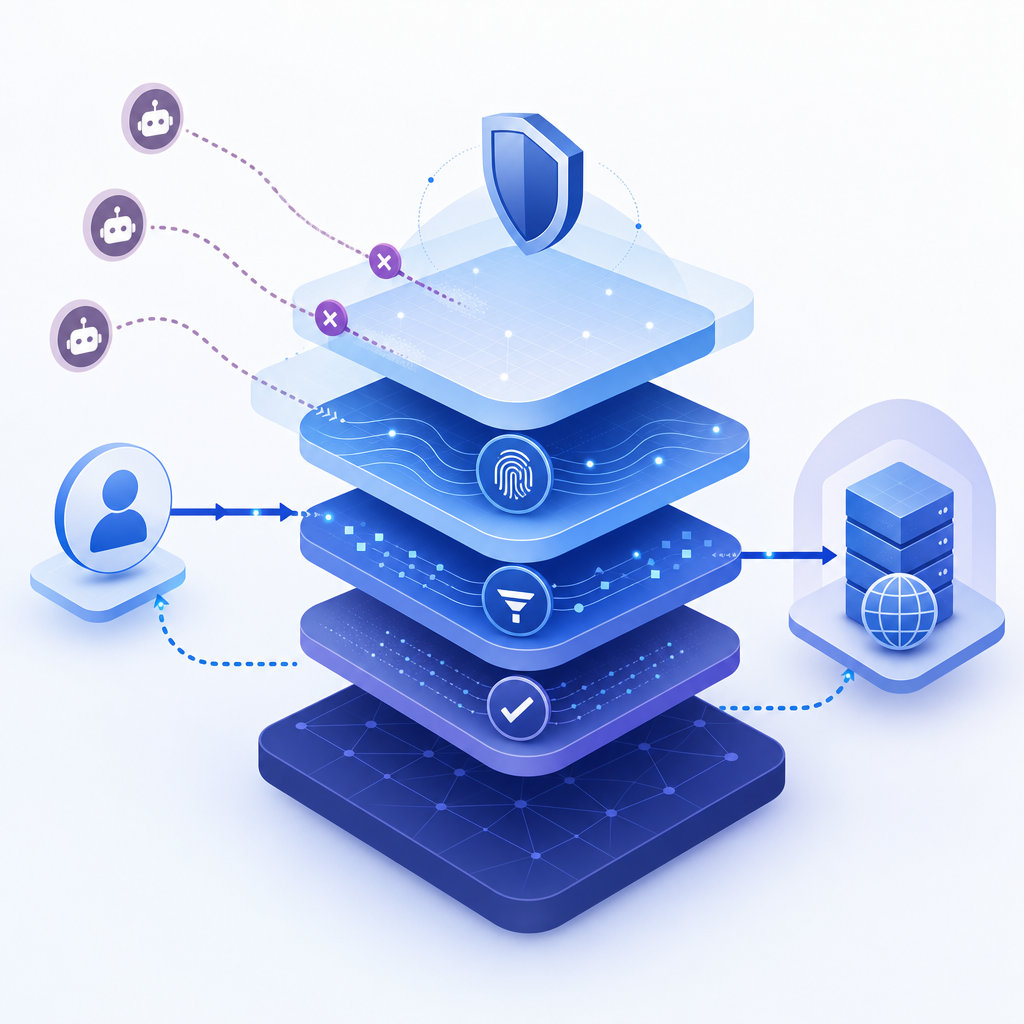
An anti bot proxy is a security mechanism designed to detect and block bot traffic that originates from proxy IP addresses rather than direct user connections. Proxy servers, VPNs, and anonymizers can mask an attacker's true IP, making it challenging to apply traditional IP-based filtering. Anti bot proxy systems analyze multiple signals—such as IP reputation, proxy type, behavior patterns, and interaction data—to decide whether to allow, flag, or challenge the connection.
Unlike general rate limiting or IP banning, anti bot proxy software aims to distinguish “good” proxies, such as those used by legitimate corporate networks or privacy-conscious users, from proxies used primarily for evading detection by bots. This nuance helps avoid disrupting genuine user access while maintaining strict defenses against malicious automation.
Key Techniques Behind Anti Bot Proxy Solutions
Anti bot proxy tools rely on several technical methods to identify and mitigate proxy-based bot attacks:
IP Intelligence and Reputation Databases
- Many services aggregate data from global networks to mark IP ranges associated with known proxy providers, data centers, VPNs, Tor exit nodes, or suspicious activity reports.
- Real-time reputation scoring helps dynamically classify whether an incoming connection is more likely proxy-based bot traffic or a legitimate user.
Behavioral and Interaction Analysis
- Hidden challenges such as mouse movement tracking, timing analysis, or JavaScript execution checks determine if a client behaves like a human.
- Passive fingerprinting collects device properties and connection metadata without interrupting user experience.
- Repeated suspicious activity, such as rapid form submissions or unusual navigation patterns, raises flags.
Multi-factor Risk Scoring
- Combining IP intelligence with behavioral factors yields a risk score for each visit.
- Scores can trigger different actions: serving a CAPTCHA challenge, requiring multi-factor authentication, or outright blocking.
Integration with CAPTCHA Systems
- Anti bot proxy solutions commonly integrate CAPTCHAs to verify interactions suspected to be automated.
- Products like CaptchaLa provide lightweight challenges that are both effective and user-friendly.
- Comparatively, options such as Google’s reCAPTCHA, hCaptcha, or Cloudflare Turnstile offer varying balances of security, privacy, and user friction.

Comparing Popular Anti Bot Proxy Approaches
| Feature | CaptchaLa | reCAPTCHA | hCaptcha | Cloudflare Turnstile |
|---|---|---|---|---|
| Proxy Detection | IP reputation + behavior | IP + behavioral data | Behavioral + IP scoring | Risk scoring + telemetry |
| User Experience | Lightweight, multi-language | More intrusive at times | Customizable challenges | Invisible, low friction |
| SDK Support | Web, iOS, Android, Flutter | Web, iOS only | Web, mobile, SDKs | Primarily Web |
| Privacy Focus | First-party data only | Google-tracked | Privacy option available | Privacy-forward |
| Free Tier / Limits | 1000/mo free | Free, usage-based | Free + paid tiers | Free for Cloudflare users |
Each approach has strengths—CaptchaLa offers multi-platform SDKs, extensive language support, and an emphasis on first-party data privacy. Google’s reCAPTCHA benefits from wide adoption but may impact privacy and user flow. hCaptcha balances monetization and privacy, while Cloudflare Turnstile is tightly integrated into their CDN ecosystem.
How To Implement Anti Bot Proxy Defenses Effectively
- Combine IP Analysis with Behavioral Data: Relying solely on proxy IP blacklists is insufficient. Integrate session and interaction analytics to assess real risk.
- Leverage SDKs for Seamless Integration: CaptchaLa provides native SDKs for Web (JavaScript, Vue, React), mobile (iOS, Android, Flutter), and desktop (Electron), simplifying deployment across platforms.
- Use Risk-Based Verification: Trigger challenges only when risk scores exceed thresholds, improving genuine user experience without compromising security.
- Validate Server-Side: Always verify tokens server-to-server using APIs such as CaptchaLa’s POST https://apiv1.captcha.la/v1/validate to prevent client-side spoofing.
- Monitor and Adjust: Continuously track attack patterns and adjust scoring algorithms accordingly to maintain effectiveness.
// Example: Server-side token validation request (pseudo-code)
// Validate user token with CaptchaLa to confirm legitimacy

POST https://apiv1.captcha.la/v1/validate
Headers:
  X-App-Key: yourAppKey
  X-App-Secret: yourAppSecret

Body:
{
  "pass_token": "userCaptchaResponseToken",
  "client_ip": "192.0.2.1"
}

// Response: success or fail with risk score and flags
Benefits of Using CaptchaLa for Anti Bot Proxy Protection
CaptchaLa offers an independent alternative to mainstream CAPTCHA providers, focusing on strong bot detection with minimal user friction. Its multi-language UI and comprehensive SDK support across popular development platforms make it a flexible choice for teams looking to build proxy-aware defenses without sacrificing performance or privacy.
Furthermore, CaptchaLa’s tiered pricing accommodates a range of needs from startups with 1,000 free monthly validations to businesses requiring over a million monthly requests, ensuring scalability as security demands evolve.
Conclusion
Anti bot proxy solutions are vital tools for mitigating proxy-driven automated abuse that can disrupt business operations, leak sensitive data, or degrade user experience. By combining IP reputation, behavioral analytics, and verification challenges, these defenses allow websites and apps to distinguish real users from hidden bot networks operating behind proxies.
Tools like CaptchaLa offer practical, privacy-conscious capabilities with broad SDK support and flexible pricing. When choosing an anti bot proxy provider, consider your specific user base, technical ecosystem, and acceptable balance between security and usability. Integrating these solutions can significantly reduce bot-related risks while keeping friction low for genuine visitors.
Where to go next? Explore CaptchaLa pricing to find a tier that fits your needs, or dive into the detailed docs for implementation guidance and security best practices.