
An anti bot link is a special URL or interaction designed to detect and block automated bots before they can perform malicious actions on a website. Its primary function is to differentiate between legitimate human users and automated scripts attempting fraud, spam, or scraping. The concept revolves around introducing verification steps and behavioral analysis that are easy for humans but difficult for bots to bypass. Using anti bot links helps prevent fake signups, credential stuffing, form abuse, and other unwanted activities that degrade website integrity.
What Exactly is an Anti Bot Link?
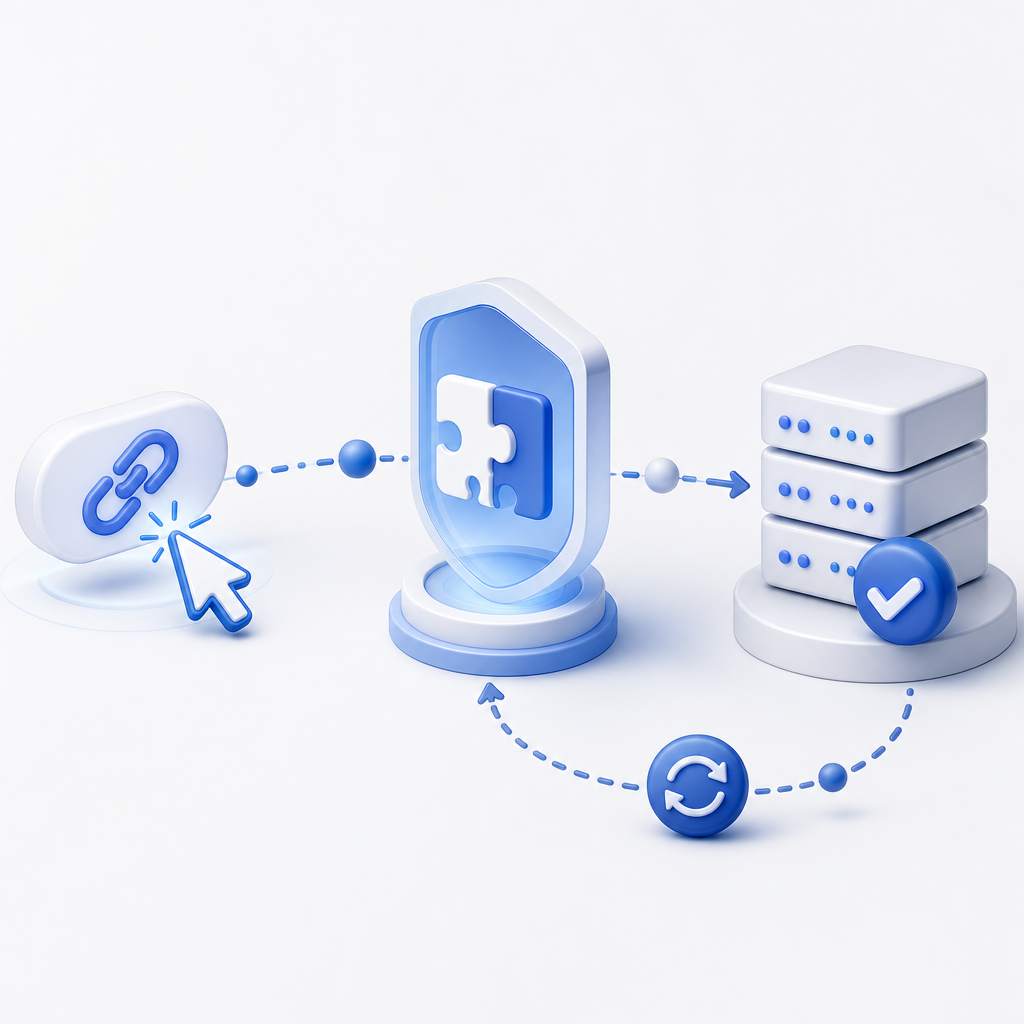
At its core, an anti bot link is an element or endpoint embedded in or linked from your site that triggers bot defense mechanisms. When a visitor clicks or loads this link, the system assesses signals like mouse movement, timing, browser behavior, IP reputation, and challenges like CAPTCHA to confirm they are human.
Unlike standard URLs, anti bot links are often tied to interactive challenges or server-side validation. For example, submitting a form behind an anti bot link might invoke a token validation requiring passing a CAPTCHA or JavaScript-based checks before granting access or completing a transaction.
Common Forms of Anti Bot Links
- CAPTCHA-protected links: URLs that display CAPTCHA challenges when accessed, blocking automated traffic unless the challenge is solved.
- Tokenized links: Links issued with single-use tokens validated on the server to prevent reuse by bots.
- Behavioral verification links: Links that combine timing analysis, mouse tracking, and other heuristics to assess request authenticity.
Such links are integral in reducing abuse, improving data accuracy, and providing a better experience for genuine users.
How Anti Bot Links Fit Into Bot Defense Strategies
An effective anti bot link integrates with a multifaceted defense setup. This often involves a layered approach combining client-side and server-side checks.
Key Components of an Anti Bot Link System
- Challenge Issuance: When a user clicks the anti bot link, a challenge such as a CAPTCHA from providers like CaptchaLa or competitors (Google's reCAPTCHA, hCaptcha, Cloudflare Turnstile) is presented.
- Token Validation: Once challenges are completed, time-limited tokens are generated and submitted with critical requests to verify authenticity.
- IP and Device Fingerprinting: Additional metadata like IP, user-agent, and device fingerprints may be tracked to identify suspicious repeat activity.
- Server Validation API: After completion, the client sends the token and context to an API endpoint for validation before proceeding with the requested action.
Here is an example snippet illustrating server-side token validation in pseudocode:
// Server-side token validation logic

function validateBotToken(pass_token, client_ip) {
    // Send POST request to anti bot API with token and IP
    response = apiPost("https://apiv1.captcha.la/v1/validate", {
       pass_token: pass_token,
       client_ip: client_ip
    }, headers = { "X-App-Key": APP_KEY, "X-App-Secret": APP_SECRET });

    if(response.success) {
        // Allow user action
        return true;
    } else {
        // Block or challenge user further
        return false;
    }
}
Integrating anti bot links as gateways to sensitive pages or functions (e.g., login, payments) adds friction only for bots but keeps the experience smooth for humans.
Comparing Popular Bot Defense Solutions With Anti Bot Link Features
To understand how anti bot links function practically, let’s compare some major CAPTCHA and bot defense providers.
| Feature | CaptchaLa | reCAPTCHA (Google) | hCaptcha | Cloudflare Turnstile |
|---|---|---|---|---|
| Anti Bot Link Support | Yes, tokenized & interactive challenges | Yes, new versions include link validation options | Yes, customizable challenges and tokens | Yes, lightweight token-based challenges |
| Integration Languages | 8 UI languages & SDKs for Web, iOS, Android, Flutter | Web JS, Android, iOS SDKs | Web JS, iOS, Android SDKs | Primarily Web JS |
| Server-side Validation | API with pass_token + client_ip verification | Token/response verification | Server-side token validation | Server-side token validation |
| Pricing Model | Free 1K/mo + scalable tiers up to 1M+ requests | Free with usage limits and enterprise plans | Free tier + paid plans | Included in Cloudflare plans |
| Data Privacy | First-party data only, no third-party tracking | Google collects user data | Privacy-focused, less tracking | Minimal data collection |
Each service uses anti bot links or similar challenge-triggering mechanisms to defend websites, but choices vary based on developer needs, privacy, and integrations.
Technical Best Practices Using Anti Bot Links
Implementing an effective anti bot link involves more than including a CAPTCHA. Here are important considerations:
- Place links strategically: Use on forms, signup flows, sensitive transactions, and anywhere bots typically attack.
- Use token expiration: Limit how long a pass token is valid to reduce token reuse risks.
- Combine multiple signals: Leverage IP checks, behavior analysis, and challenge results for higher confidence.
- Ensure accessibility: Use solutions with diverse UI language support and options for disabled users, like CaptchaLa’s 8 languages.
- Monitor rates and logs: Analyze traffic behind your anti bot links to detect anomalies early.
- Balance usability: Don’t over-challenge to deter customers; pick challenges fitting your risk profile.
Adhering to these technical specifics helps maximize the protection an anti bot link delivers without frustrating real users.

How CaptchaLa Implements Anti Bot Links
CaptchaLa offers a straightforward integration to add anti bot links to your site or app:
- Use client-side SDKs (JS, Vue, React, iOS, Android, Flutter) to embed interactive challenges triggered on link access.
- Obtain server tokens via CaptchaLa API (
server/challenge/issue) for unique challenge instances. - Validate user responses against the API endpoint (
/v1/validate) with pass_token and client IP to confirm genuine users. - CaptchaLa supports flexible UI language choices, adapting to global user bases.
- Their pricing tiers accommodate varying traffic levels, starting with a generous free tier.
Whether securing login flows or protecting contact forms, integrating anti bot links via CaptchaLa combines usability with protection, while allowing for easy customization and scalability.
Conclusion
An anti bot link is a powerful, precise tool to defend websites from malicious bot traffic by gating actions with human verification and tokenized validation. When correctly implemented, it significantly reduces fraud, spam, and abuse, improving both security and user experience.
While many solutions like reCAPTCHA, hCaptcha, and Cloudflare Turnstile offer similar features, each has tradeoffs in privacy, pricing, and technical integration. CaptchaLa provides a competitive option with multi-language support, extensive SDKs, and developer-friendly APIs to build your bot defense strategy robustly.
For developers and site owners ready to enhance bot protection through anti bot links, exploring detailed integration steps or pricing plans can be your next step.
Where to go next? Check out CaptchaLa pricing or dive into the CaptchaLa docs for implementation guidance.