
Anti bot legislation is best understood as a growing set of laws and rules that push organizations to reduce automated abuse without collecting more personal data than necessary. For product teams, the practical answer is: treat bot defense as a privacy, accessibility, and risk-management problem, not just a security feature. That means using first-party signals, minimizing data retention, documenting your controls, and choosing verification methods that fit both your users and your jurisdiction.
The reason this matters now is simple: regulators are increasingly focused on consent, transparency, unfair automation, and the handling of personal data. At the same time, attackers keep scaling credential stuffing, fake account creation, inventory abuse, and scraping. If your controls are too weak, fraud and abuse spread; if they are too aggressive, you risk harming conversions and violating privacy expectations. The right path is a measured one.

What anti bot legislation usually affects
The term itself is not always a single statute. In practice, it points to overlapping legal obligations that influence how you detect and block automation. Depending on where you operate, that can include privacy law, consumer protection rules, anti-fraud requirements, accessibility obligations, and sector-specific compliance.
A few recurring themes show up across regions:
Data minimization
- Collect only what you need to distinguish automated from human activity.
- Avoid unnecessary device fingerprinting or long-lived identifiers unless you have a clear lawful basis and retention policy.
Transparency
- Tell users when you use anti-bot checks, especially if those checks may affect account creation, login, or checkout.
- Publish it in your privacy policy and, where relevant, your terms or security notices.
Fairness and access
- Make sure verification does not disproportionately block legitimate users.
- Have fallback flows for users with assistive tech, low-connectivity environments, or stricter browser settings.
Purpose limitation
- Use bot signals for abuse prevention, not unrelated profiling or marketing.
- Keep the control scoped to the risk you are trying to reduce.
Cross-border transfer and retention
- Know where challenge and validation data goes, how long it persists, and who can access it.
This is why many teams now prefer first-party architectures. If the verification step is closely integrated into your own domain and backend, it is easier to explain, audit, and govern than a patchwork of opaque third-party scripts.
How to design bot defenses that fit compliance
If your organization is trying to align with anti bot legislation, the goal is not to eliminate every bot. That is unrealistic. The goal is to create a defensible control stack that reduces abuse while keeping your privacy story coherent.
Start with a data inventory
Before implementation, map the data involved in your anti-bot flow:
- What is collected in the browser or app
- What is sent to your backend
- What is sent to a verification service
- Whether IP addresses, device attributes, or session identifiers are used
- How long each field is retained
That inventory becomes the basis for your legal review, security review, and documentation. It also helps you decide whether you need consent, legitimate-interest analysis, or another lawful basis, depending on jurisdiction.
Prefer verification that is easy to explain
A good anti-bot setup should be describable in plain language. For example: “We check a signed token from the challenge service before allowing account creation.” That is much easier to explain than an opaque chain of trackers and risk models.
CaptchaLa is designed around that kind of implementation: native SDKs for Web, iOS, Android, Flutter, and Electron, plus server SDKs like captchala-php and captchala-go. The platform also supports eight UI languages, which matters if you need to serve different regions without creating a localization bottleneck. You can review implementation details in the docs.
Keep the backend authoritative
A compliant bot-defense system should not trust the client alone. The client can help gather signals and present a challenge, but your server should make the final call.
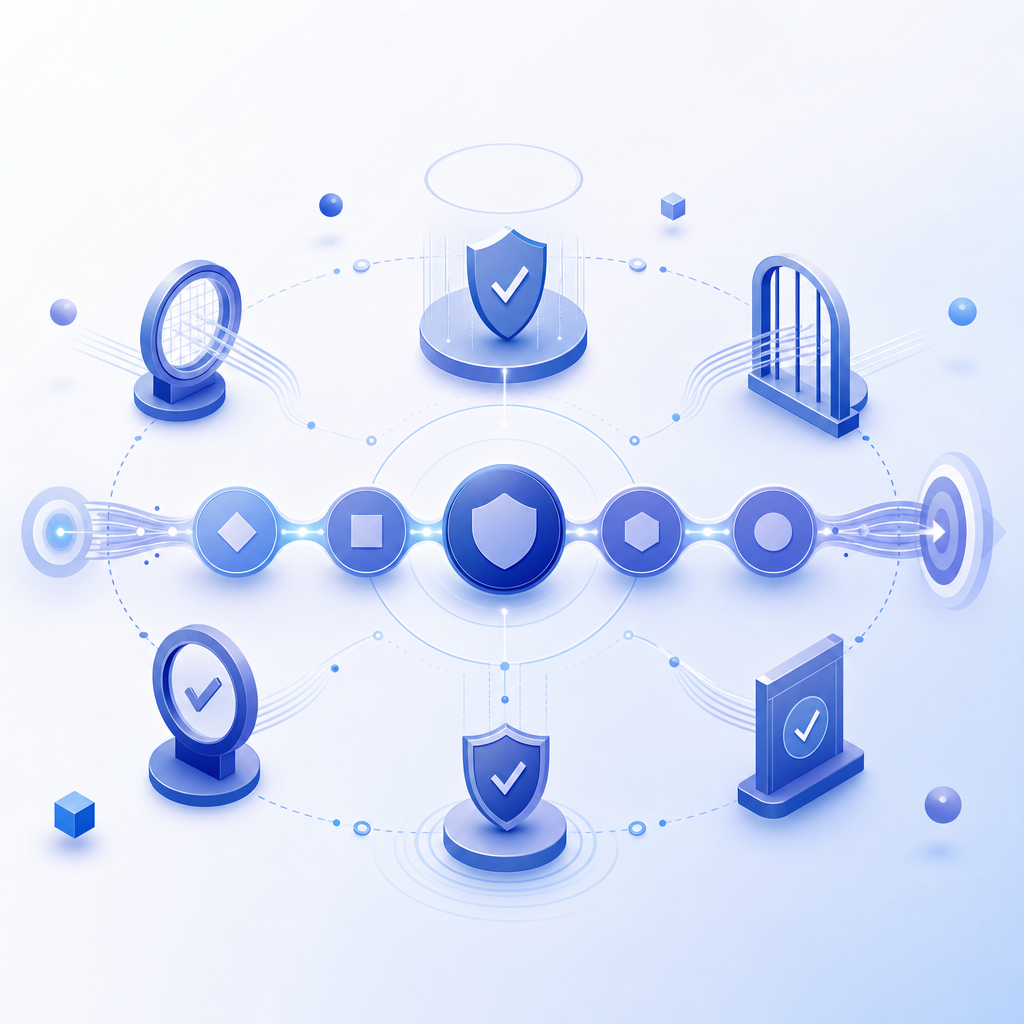
A typical verification sequence looks like this:
- The client receives a challenge or loader from your site.
- The user completes the challenge.
- The client receives a pass token.
- Your backend validates that token with your verification endpoint.
- Your application allows or denies the sensitive action.
For CaptchaLa, validation happens with a server-side request to:
POST https://apiv1.captcha.la/v1/validatewith a JSON body containing pass_token and client_ip, authenticated using X-App-Key and X-App-Secret.
That pattern is helpful from a compliance standpoint because it keeps the authoritative decision in your infrastructure. It also gives you a clean place to enforce logging, retention controls, and risk-based thresholds.
Comparing common approaches
Different anti-bot products make different tradeoffs. The right choice depends on your threat model, UX tolerance, and governance requirements.
| Tool | Typical strength | Common tradeoff | Compliance note |
|---|---|---|---|
| reCAPTCHA | Broad familiarity, mature ecosystem | Can feel intrusive; risk scoring may be less transparent | Review data collection and cross-border implications carefully |
| hCaptcha | Strong challenge-based approach | User friction can increase on some flows | Good to document challenge triggers and fallback paths |
| Cloudflare Turnstile | Low-friction experience in many cases | Often tied to broader edge/security stack decisions | Check how its signals fit your privacy notices |
| CaptchaLa | First-party-oriented bot defense flow | Requires integration planning like any verification layer | Easier to align with minimal-data, backend-validated designs |
None of these tools is automatically “compliant” or “non-compliant.” Compliance depends on configuration, disclosures, retention, and the surrounding legal context. The most important question is whether your team can explain exactly what data is used, why it is used, and how users are affected.
For teams that want a simpler rollout path, CaptchaLa exposes a loader at https://cdn.captcha-cdn.net/captchala-loader.js and server-token issuance at POST https://apiv1.captcha.la/v1/server/challenge/issue. That separation between challenge issuance and validation can make your architecture easier to review internally.
Practical implementation checklist
If you are updating your bot-defense strategy because of anti bot legislation or a new legal review, use this checklist.
Define the protected action
- Signup, login, password reset, checkout, coupon redemption, scraping-sensitive endpoints, or content posting.
- Apply stronger controls only where abuse risk justifies it.
Document your data flow
- List every request, cookie, identifier, and server call.
- Record which are necessary for security and which are optional.
Set a retention policy
- Keep validation logs only as long as needed for abuse investigation, debugging, or audit requirements.
- Separate security logs from product analytics.
Choose a user-friendly fallback
- Consider an alternate path for users who cannot complete a challenge.
- Avoid dead ends that block legitimate access without recourse.
Test across devices and locales
- Verify behavior on mobile web, desktop, low bandwidth, and assistive technologies.
- If you support global audiences, confirm that language and formatting are clear.
Review vendor and contract terms
- Confirm the vendor’s data handling posture, subprocessor list, and support for your region’s requirements.
- Make sure your privacy policy matches reality.
For implementation teams, a small amount of code discipline goes a long way:
// Example: validate the pass token on your server
// 1. Receive the token from the client
// 2. Send token + client IP to the validation API
// 3. Allow the action only if validation succeeds
// 4. Log only the minimum needed for security review
If you are building in Web, mobile, or hybrid apps, check the SDK and package options before you commit to an architecture. CaptchaLa publishes native support for Web (JS/Vue/React), iOS, Android, Flutter, and Electron, plus package names such as Maven la.captcha:captchala:1.0.2, CocoaPods Captchala 1.0.2, and pub.dev captchala 1.3.2. That breadth can reduce the temptation to stitch together multiple inconsistent anti-bot systems.
The main takeaway for product and security teams
Anti bot legislation is not a reason to stop defending your product. It is a reason to defend it more thoughtfully. The strongest programs usually share three traits: they collect less data, explain more clearly what they do, and keep the final enforcement decision on the server side.
If your team is revisiting login abuse, fake account prevention, or checkout protection, start by mapping the data you already touch, then choose a verification flow that supports your privacy posture. You can explore the pricing page to match volume needs, or go straight to the docs if you are ready to evaluate an implementation.