
Deploying effective anti bot measures in checkpoints is crucial to safeguard digital entry points from automated attacks that can degrade service quality, compromise security, or inflate fraudulent activity. Anti bot in checkpoint solutions act as gatekeepers, analyzing user behavior and interactions to distinguish legitimate humans from malicious bots, blocking unauthorized access before damage occurs.
This post explores how anti bot technology can be integrated into checkpoints to improve security posture. We'll cover common approaches, key technical considerations, a comparison of popular tools, and how platforms like CaptchaLa support robust bot defenses in checkpoint scenarios.
What Does Anti Bot in Checkpoint Mean?
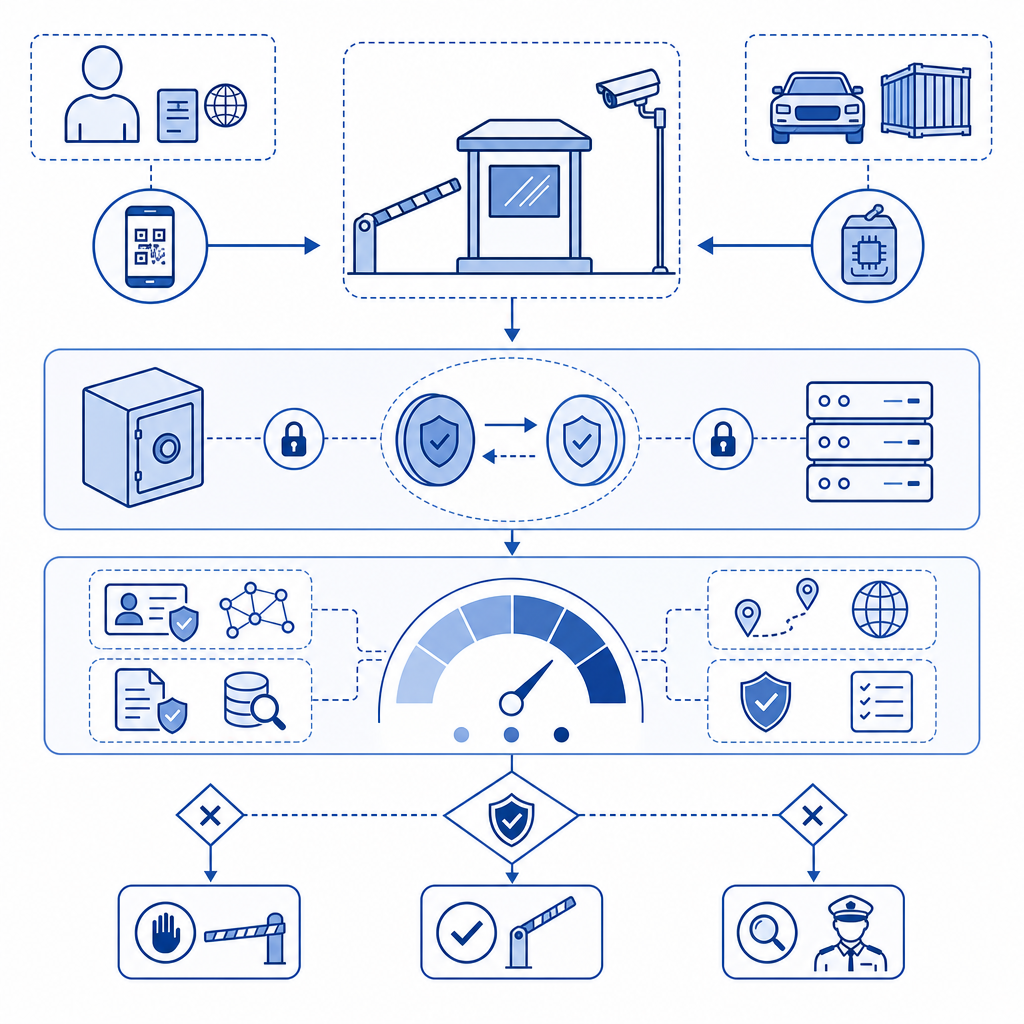
A "checkpoint" refers to any verification step in a web or app flow where user identity or legitimacy is tested — examples include login pages, sign-up forms, payment gates, comment submissions, or sensitive API endpoints. Anti bot mechanisms in these checkpoints perform real-time risk assessments to filter out scripted or automated interactions that try to bypass normal human verification.
Unlike passive monitoring, which analyzes traffic patterns after the fact, active checkpoint anti bot defenses enforce immediate validation. This proactive stance helps prevent abuse such as credential stuffing, fake account creation, spam submissions, scalping, and scraping.
Core Techniques for Anti Bot Checkpoints
The typical anti bot in checkpoint system combines several methods to maximize detection accuracy:
1. Challenge-Response Tests (CAPTCHAs)
These are interactive puzzles designed to be easy for humans but very difficult for automated bots. Common types include:
- Image recognition tasks (select all pictures with street signs)
- Text-based distorted characters requiring manual input
- Interactive sliders or drag-and-drop verification
Popular CAPTCHA providers include Google reCAPTCHA, hCaptcha, and Cloudflare Turnstile. CaptchaLa offers a lightweight alternative optimized for checkpoint integration, supporting multiple UI languages and native SDKs that simplify deployment.
2. Behavioral Analysis
Monitoring mouse movement, typing speed, touch pressure, and scroll patterns provides context clues indicating a human user. Bots typically generate unnatural or overly consistent input patterns, enabling heuristic filters to flag suspicious activity without user disruption.
3. Risk Scoring & Reputation Checks
Integrating IP reputation databases and device fingerprinting allows checkpoints to assign risk scores and decide whether to require additional verification. Combining first-party behavioral data with third-party heuristics creates a layered defense.
4. Server-Side Verification
Once a client passes the challenge or behavioral test, servers verify tokens asynchronously by contacting anti bot service APIs. This prevents replay attacks and ensures validation integrity.
Comparing Popular Anti Bot Solutions for Checkpoints
| Feature | reCAPTCHA | hCaptcha | Cloudflare Turnstile | CaptchaLa |
|---|---|---|---|---|
| Challenge Types | Image/text/audio puzzles | Image puzzles | Invisible, score-based | Multi-language UI; image/text |
| Privacy Focus | Google data collection | Privacy-friendly | Privacy-oriented | First-party data only |
| SDK Support | Web, mobile | Web, mobile | Web only | Web (JS/Vue/React), iOS, Android, Flutter, Electron, server SDKs (PHP/Go) |
| Validation Method | Client + server token | Client + server token | Client + server token | POST API token validation |
| Pricing | Free with limitations | Free + paid tiers | Free | Free tier + scalable paid plans |
| Ease of Integration | Moderate | Moderate | Easy | Simple API and SDK usage |
Selecting the right tool depends on balancing user experience, privacy requirements, and the technical environment your checkpoint operates in.
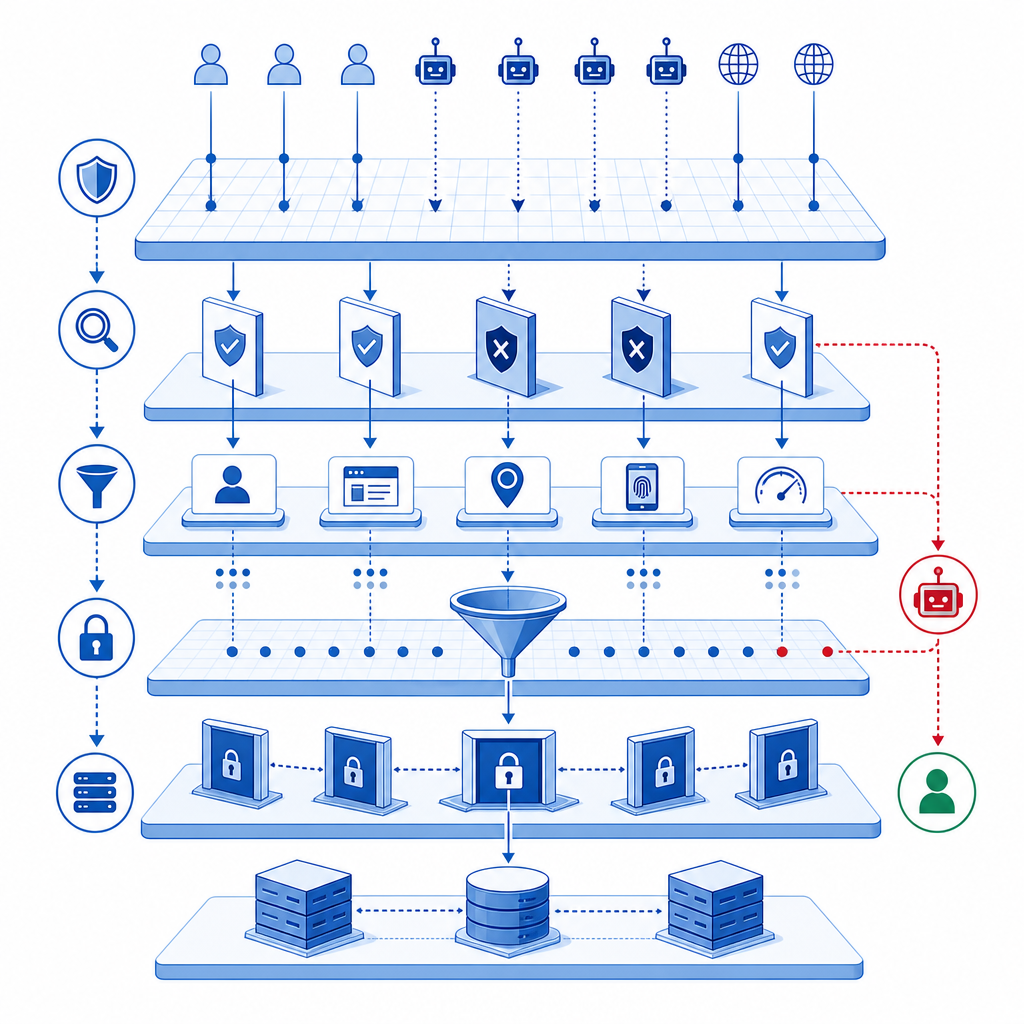
Implementing Anti Bot in Checkpoint: Technical Overview
Here’s a simplified sequence for integrating an anti bot checkpoint using a token-based system like CaptchaLa:
- Client Load: The checkpoint page loads an anti bot widget or script (e.g.,
https://cdn.captcha-cdn.net/captchala-loader.js) to present a challenge or monitor behavior. - User Interaction: The user completes the CAPTCHA or navigates naturally to generate behavioral signals.
- Token Issuance: Upon passing, a client token is generated and sent with the user request.
- Server Validation: Your backend receives the token and submits it to the anti bot API (e.g., POST to
https://apiv1.captcha.la/v1/validatewith{pass_token, client_ip}) using authorization headers. - Decision Logic: Based on the API response, your server either allows the transaction or blocks it, possibly invoking fallback challenges or logging incidents.
Example Validation Request (pseudocode)
# Validate CaptchaLa token at checkpoint
def validate_captcha(pass_token, client_ip):
    headers = {
        "X-App-Key": "your_app_key",
        "X-App-Secret": "your_app_secret",
        "Content-Type": "application/json"
    }
    body = {
        "pass_token": pass_token,
        "client_ip": client_ip
    }
    response = http.post("https://apiv1.captcha.la/v1/validate", json=body, headers=headers)
    return response.json().get("success")
This modular approach lets you incorporate anti bot safeguards without heavily altering existing user flows.
Balancing Security and User Experience
One challenge in checkpoint anti bot deployment is mitigating user frustration while maintaining security. Overly aggressive CAPTCHA prompts risk alienating users, whereas too lenient checks invite abuse.
Solutions like CaptchaLa help address this by:
- Offering multiple challenge types and UI languages
- Supporting native SDKs for seamless integration on mobile and web
- Leveraging behavioral analysis to reduce CAPTCHA frequency
- Providing flexible pricing so organizations can scale protection thoughtfully
Conclusion: Choosing and Implementing Anti Bot in Checkpoint Solutions
Integrating anti bot measures at checkpoints is critical for preserving security and service integrity. By combining challenge-response mechanisms, behavioral analytics, and server-side verification, organizations can block automated threats while minimizing user disruption.
Platforms like CaptchaLa provide versatile tools and APIs to implement these protections effectively. When selecting an anti bot provider, carefully evaluate SDK ecosystem, privacy controls, and operational scalability to fit your product’s needs.
Where to go next? Explore CaptchaLa’s documentation for implementation guides or check the pricing plans to find the right tier for your traffic volume and security demands.