
If you're searching for "anti bot github," you're likely looking for open source tools and projects to defend your application against malicious bots. The good news is GitHub hosts a rich ecosystem of bot mitigation solutions, from libraries and frameworks to integrations with popular CAPTCHA services. Choosing the right approach depends on your infrastructure, user experience goals, and threat landscape.
Here’s an overview of popular anti bot solutions you can find on GitHub, how they compare, and what makes a solid bot defense strategy today.
What Does an Effective Anti Bot Solution Involve?
At its core, anti bot software must distinguish between genuine human users and automated scripts, blocking abusive or fraudulent interactions while minimizing friction for real visitors. Common strategies include:
- Challenge-response tests like CAPTCHAs
- Behavioral analysis (e.g., mouse movements, typing patterns)
- Rate limiting and request fingerprinting
- IP reputation and threat intelligence integration
Many open source projects on GitHub implement one or more of these tactics, often serving as building blocks rather than all-in-one solutions.
Popular Open Source Anti Bot Tools on GitHub
Here’s a quick look at some well-known repositories and what they offer:
| Project | Features | Language | Ideal Use Case | Limitations |
|---|---|---|---|---|
| BotScout | IP and user agent blacklists | Python, PHP | Basic blacklist enforcement | Limited behavioral analysis |
| fail2ban | Log parsing, IP blocking | Python | Server-level brute force defense | Requires manual tuning |
| Cloudflare Turnstile (client SDKs) | Invisible CAPTCHA alternative | JS, Go, PHP | Seamless bot filtering | Proprietary service, partial OSS |
| CaptchaLa SDKs (available on GitHub) | CAPTCHA challenges with multi-platform support | JS, PHP, Go, iOS, Android, Flutter | Flexible integration for apps needing CAPTCHA | Requires API key, SaaS dependency |
Most comprehensive anti bot solutions are a blend of server-side validation and client-side challenges, with modern CAPTCHA providers like CaptchaLa offering SDKs and APIs easily integrated from GitHub-hosted client and server libraries.
How to Integrate an Anti Bot GitHub Project in Your Stack
When incorporating an open source anti bot tool from GitHub, consider these technical details:
Client-side Integration
Load the challenge widget or verification script in your frontend application. For example, CaptchaLa provides a loader script hosted via CDN:js// Load CaptchaLa anti bot widget const script = document.createElement('script'); script.src = 'https://cdn.captcha-cdn.net/captchala-loader.js'; document.head.appendChild(script);Server-side Validation
Validate user responses securely by calling the API with tokens obtained from the client:php// PHP example using CaptchaLa SDK $response = $client->validate([ 'pass_token' => $_POST['pass_token'], 'client_ip' => $_SERVER['REMOTE_ADDR'] ]); if ($response->isValid()) { // Proceed with request } else { // Block or challenge user }Rate Limiting & Logging
Combine CAPTCHA checks with request rate monitoring to mitigate advanced bots.Customization & Localization
Effective solutions like CaptchaLa support 8 UI languages and offer native SDKs for popular frameworks (React, Vue, iOS, Android), which is especially useful for global apps.
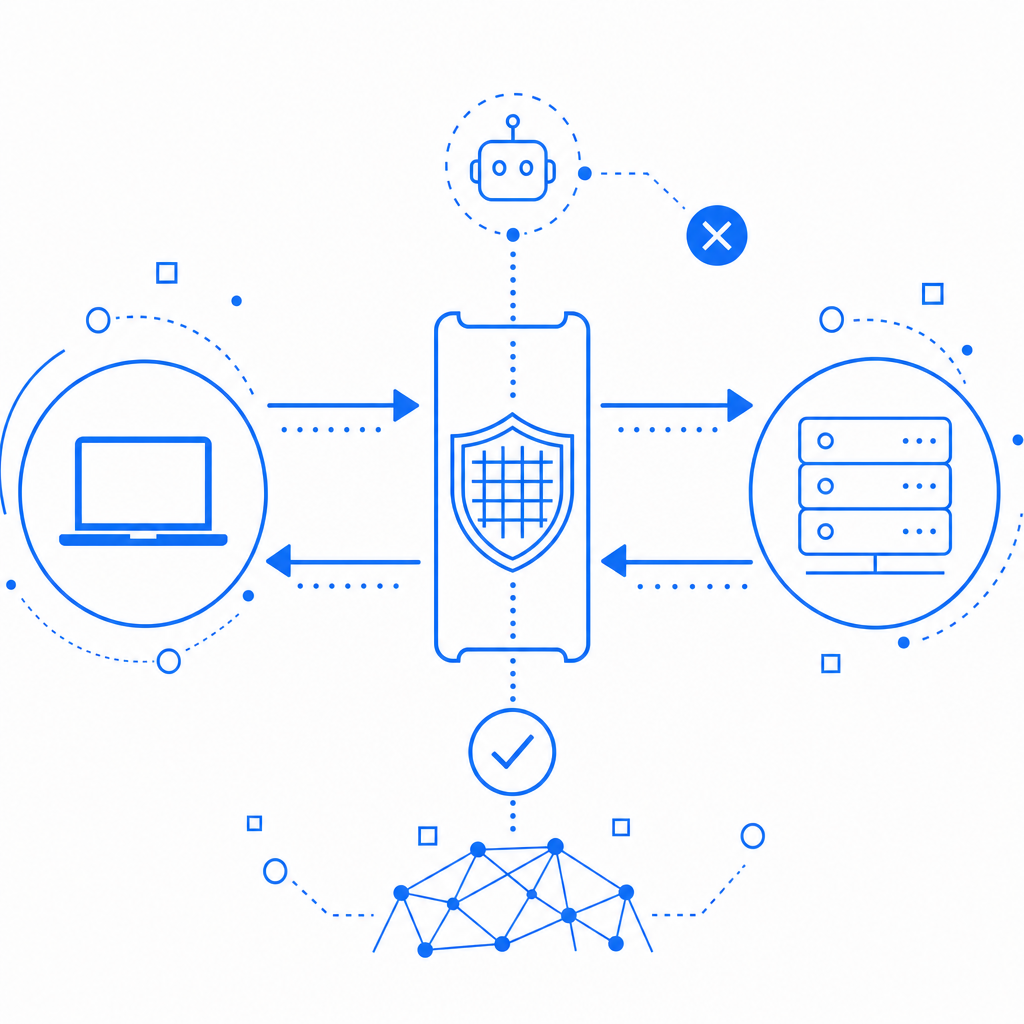
Comparing Top CAPTCHA-based Anti Bot Options from GitHub
CAPTCHA providers often supply SDKs and sample projects on GitHub, designed to integrate their challenge mechanisms:
| Feature | reCAPTCHA | hCaptcha | Cloudflare Turnstile | CaptchaLa |
|---|---|---|---|---|
| Open Source SDKs | Partial | Partial | Partial/proprietary | Fully open SDKs/APIs plus SaaS service |
| Privacy Focus | Google data-driven | Privacy-conscious | Focus on minimal data | First-party data only |
| Multi-platform SDKs | JS, Android, iOS | JS, Android, iOS | JS, limited others | JS, iOS, Android, Flutter, Electron |
| UI Languages | Limited | Limited | Limited | 8 languages |
| Free Tier (per month) | Unlimited but subject to Google ToS | Free with usage limits | Free | 1000 free per month |
Choosing an open source-backed CAPTCHA often boils down to balancing ease of implementation, user experience, privacy concerns, and cost. CaptchaLa offers fully documented SDKs (docs) and a tiered pricing model catering to startups and enterprises alike.
Benefits of Using SaaS-backed Open Source Anti Bot Tools
Many organizations prefer SaaS CAPTCHA services with open SDKs from GitHub for these reasons:
Simplified Maintenance
The provider handles updates against emerging bot techniques without your team re-inventing the wheel.Cross-platform Consistency
SDKs cover various app frameworks, saving development time.Data Privacy & Security
Some providers, like CaptchaLa, emphasize using only first-party data, appealing to privacy-conscious companies.Scalability
SaaS backends can absorb high volumes of validations and provide analytics, often outpacing self-hosted projects.
While purely self-hosted anti bot GitHub projects provide flexibility, combining them with CAPTCHA SaaS APIs offers a pragmatic balance between control and convenience.

Conclusion
When searching "anti bot github," open source tools and SDKs provide foundational bot defense that can be integrated and customized. However, combining these with robust SaaS CAPTCHA providers—such as CaptchaLa and others—creates a more reliable and user-friendly barrier to automated abuse.
Whether you want to implement basic IP blocking from GitHub repos or plug in advanced CAPTCHA challenges, remember to consider your app’s architecture, user experience, and privacy posture. Leveraging modern SDKs and APIs with solid documentation helps streamline the process and future-proof your defenses.
Ready to explore how CaptchaLa can fit into your anti bot strategy? Check out our detailed docs and pricing plans to get started.