
Anti bot features are critical tools designed to distinguish human users from malicious bots attempting to exploit online services. These features work by challenging suspicious activity, analyzing behavioral patterns, or verifying user intent—thereby mitigating fraud, spam, and automated abuse. Implementing robust anti bot features helps protect websites and applications from fake registrations, scalping, spamming, and scraping, all while preserving a smooth experience for legitimate users.
This post explores the core anti bot features commonly deployed in bot defense solutions, their technical approaches, and key considerations when selecting or building such a system. We’ll compare popular CAPTCHA providers like CaptchaLa, reCAPTCHA, hCaptcha, and Cloudflare Turnstile, and outline best practices to strike a balance between security and usability.
How Anti Bot Features Work: A Technical Overview
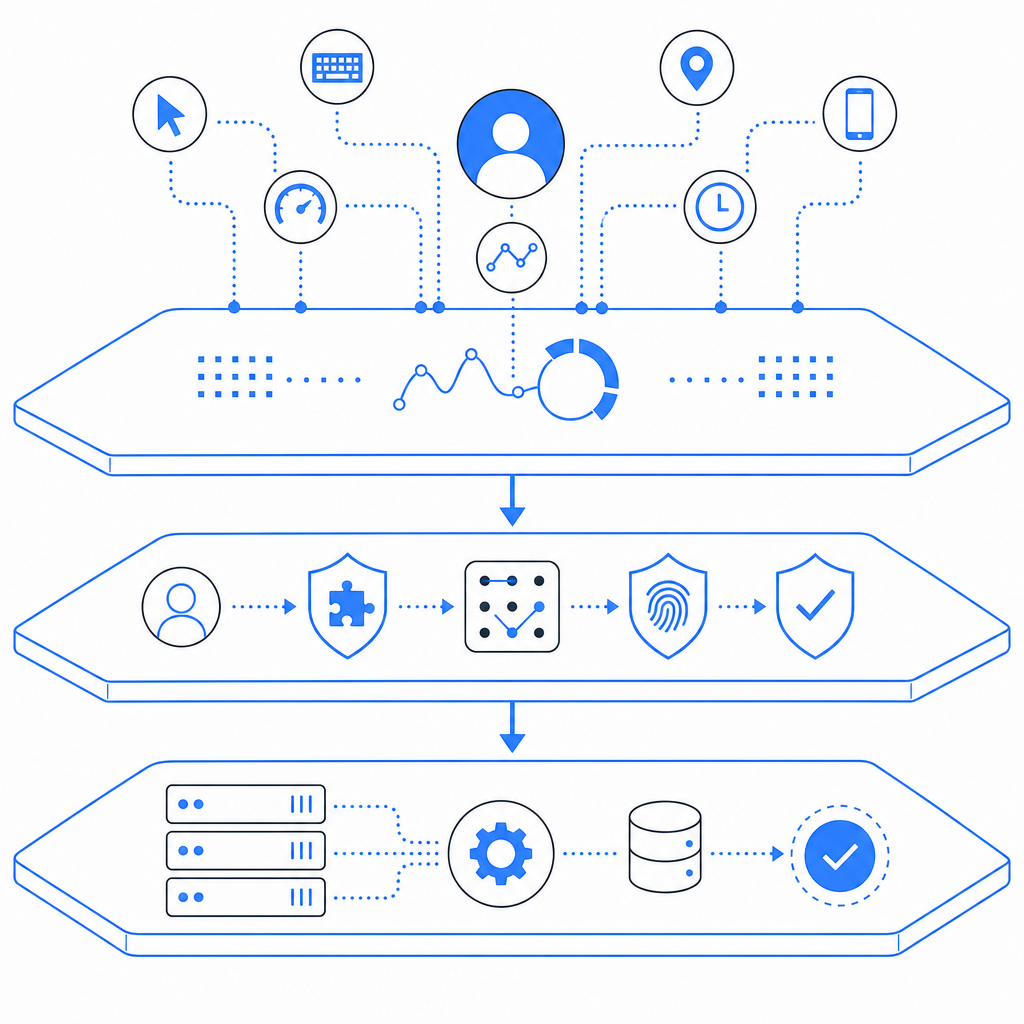
Anti bot systems generally combine multiple layers of validation to detect and block non-human traffic. These layers typically include:
1. Challenge-Response Tests
The classic CAPTCHA (Completely Automated Public Turing test to tell Computers and Humans Apart) is the first line of defense. It asks users to solve puzzles difficult for bots, such as identifying objects in images or typing distorted text. Modern implementations often use:
- Image-based puzzles
- Animated challenges
- Logical or context-based questions
These create friction for bots unable to process visual or contextual information reliably, but can slow real users if too intrusive.
2. Behavioral Analysis
Passive anti bot features analyze user behavior patterns to identify suspicious activity without interrupting the experience. Key metrics include:
- Mouse movement and keystroke dynamics
- Time spent on page or form completion speed
- IP reputation and request frequency
- Browser fingerprinting
Behavioral signals help score traffic risk in real time, enabling adaptive challenges or outright blocking of high-risk requests.
3. Client-Side and Server-Side Validation
Anti bot systems involve both client-side scripts and server-side validation endpoints:
- Client-Side: JavaScript SDKs collect interaction data and trigger challenges when anomalies arise. Libraries like CaptchaLa’s loader script (
https://cdn.captcha-cdn.net/captchala-loader.js) integrate easily with modern frameworks (React, Vue). - Server-Side: Verification of tokens and challenges occurs on backend servers to prevent token forgery. For example, CaptchaLa provides endpoints such as
POST https://apiv1.captcha.la/v1/validaterequiring apass_tokenand client IP to authenticate requests.
4. Adaptive Challenge Issuance
More advanced anti bot systems adjust challenge difficulty dynamically based on risk scores. For example, less suspicious users might get invisible or simplified challenges (like Cloudflare Turnstile), while suspicious requests receive more thorough verification.
Comparison of Popular Anti Bot Feature Sets
| Feature | CaptchaLa | reCAPTCHA | hCaptcha | Cloudflare Turnstile |
|---|---|---|---|---|
| Challenge Types | Image puzzles, logic tests | Image puzzles, audio CAPTCHA | Image puzzles | Invisible, minimal friction |
| Behavioral Analysis | Yes, JS + server-side scoring | Yes, extensive | Yes | Yes |
| SDK Availability | Web (JS/React/Vue), iOS, Android, Flutter, Electron; Server SDKs (PHP, Go) | Web, server-side only | Web, server-side only | Web SDK only |
| Token Validation | POST API with tokens + IP | Server-side verification | Server-side verification | Server-side verification |
| UI Languages Supported | 8 native UI languages | Several languages | Multiple UI languages | English primarily |
| Pricing | Free tier 1000/mo; Pro 50K-200K; Business 1M | Free with usage limits | Free and paid tiers available | Free with Cloudflare services |
Each platform balances ease of integration and user experience differently. reCAPTCHA is widely adopted but can feel intrusive for some users. hCaptcha is an alternative emphasizing privacy and monetization. Cloudflare Turnstile aims for minimal user impact but requires a Cloudflare account. CaptchaLa’s multi-platform SDKs combined with first-party data handling provide a flexible option for developers seeking more control and localization.
Implementing Anti Bot Features: Best Practices
When adding anti bot defenses, consider these technical specifics:
Layered Defense
Combine challenge-response, behavioral analytics, and IP reputation instead of relying on one mechanism. This reduces chances of false positives and better adapts to evolving attack vectors.User Experience Priority
Avoid overly aggressive CAPTCHAs that frustrate users. Implement invisible or simplified challenges for low-risk users, reserving harder challenges for suspicious traffic.Localization & Accessibility
Provide multiple UI language options (CaptchaLa includes 8 languages) and accessible challenges that work for users with disabilities.Integration Flexibility
Use SDKs compatible with your tech stack. CaptchaLa supports popular frontend frameworks (React, Vue) and mobile platforms (iOS, Android, Flutter).Server-Side Validation
Always verify tokens on your backend to prevent spoofing. CaptchaLa’s secure API requiresX-App-KeyandX-App-Secretheaders, along with POST data including thepass_tokenand client IP.Monitoring & Reporting
Continuously monitor challenge success rates and adjust detection thresholds to balance security and usability.
How CaptchaLa Supports Effective Anti Bot Features
CaptchaLa offers a comprehensive suite of anti bot features designed with developer flexibility and user experience in mind:
- Native SDKs for a broad range of platforms including web (JavaScript, React, Vue), native mobile (iOS, Android, Flutter), and desktop (Electron).
- Server SDKs in popular languages like PHP and Go streamline backend validation integration.
- Multi-language UI support ensures global usability without additional localization work.
- Efficient token validation API with secure authentication to safeguard your endpoints.
- Tiered pricing starting with a free layer allowing 1000 validated interactions monthly, supporting projects from prototypes to enterprise scale.
By leveraging CaptchaLa’s customizable challenges and passive risk scoring, teams can implement adaptive anti bot defenses that respond intelligently to threats without interrupting genuine users.
Conclusion
Anti bot features are essential for maintaining secure, user-friendly online environments. By combining challenge-response puzzles, behavioral analytics, and strong backend validation, developers can effectively mitigate automated abuse while preserving smooth interactions for real users.
Evaluating options like CaptchaLa, reCAPTCHA, hCaptcha, and Cloudflare Turnstile based on their anti bot capabilities, SDK support, and pricing helps find the best fit for your use case. Investing in layered, adaptive defenses that minimize friction ensures your service remains both accessible and resilient.
For next steps, explore CaptchaLa’s documentation to get started with integrations or review our pricing plans to find the tier suited for your project’s scale and needs.