
An audio CAPTCHA uses sound-based challenges to tell humans apart from automated scripts or bots by requiring a user to correctly interpret and respond to distorted or complex audio cues. Unlike visual CAPTCHAs, audio CAPTCHAs provide an alternative accessibility path for users with visual impairments, while still presenting a task that is straightforward for humans but difficult for machines to solve reliably. This makes audio CAPTCHA an important tool within multi-modal bot defense strategies.
What Is an Audio CAPTCHA and How Does It Work?
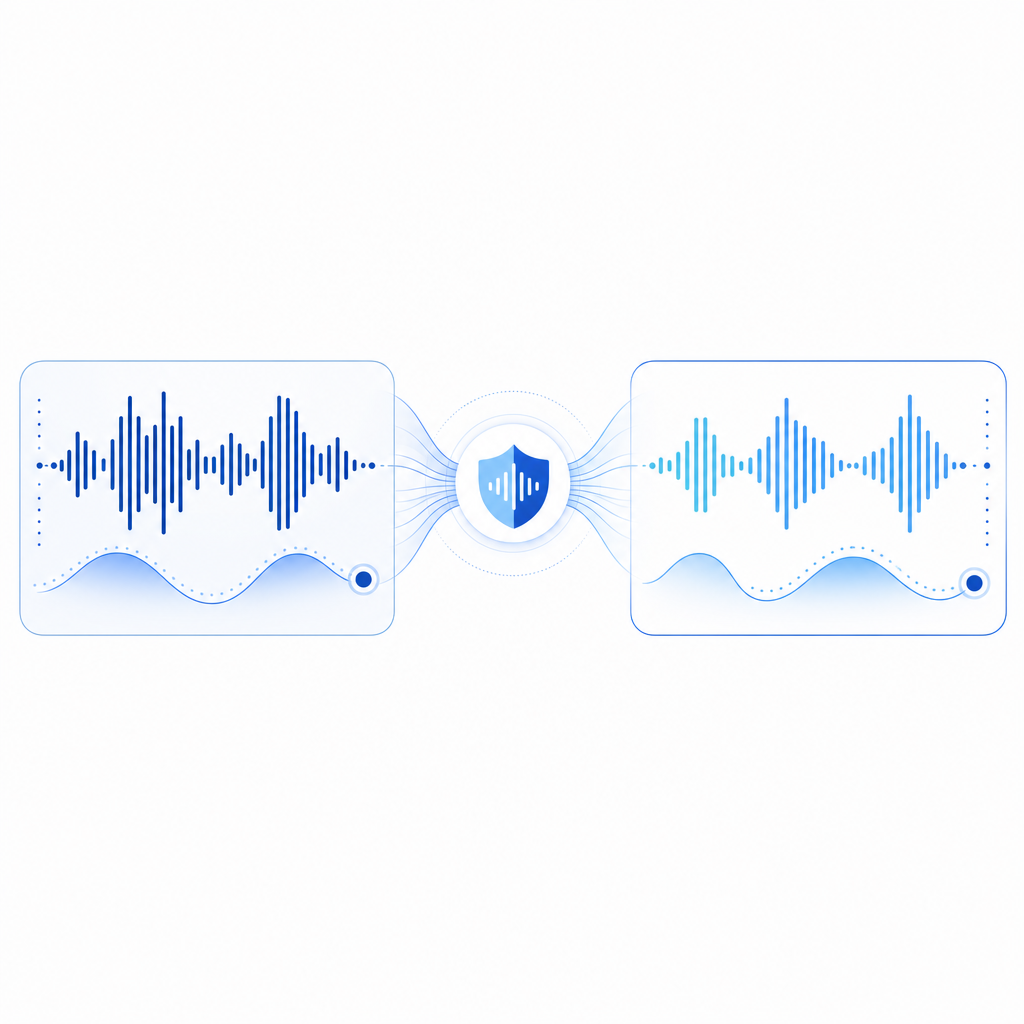
An audio CAPTCHA plays a short audio clip that contains a sequence of spoken numbers, letters, or words. Users must listen and enter the content they hear correctly. The audio is deliberately distorted, injected with background noise, or processed with varying pitch and speed to confuse automated speech recognition systems. Because humans excel at parsing noisy audio and understanding speech in challenging conditions, the system can effectively distinguish human users from bots.
Core characteristics of an audio CAPTCHA include:
- Distorted speech: Warping sound waves to reduce machine recognition.
- Background sounds: Adding ambient noise or overlapping voices.
- Variability: Randomizing pitch, speed, and voice timbre.
- Time limits: Restricting response windows to prevent brute force.
This challenge-response approach complements visual CAPTCHAs and expands accessibility without sacrificing security.
Audio CAPTCHA vs. Visual and Other Bot Challenges
To understand where audio CAPTCHA stands, it’s useful to compare it with popular bot defense techniques:
| Feature | Audio CAPTCHA | Visual CAPTCHA | Invisible CAPTCHA (reCAPTCHA v3/Turnstile) | Behavioral Analysis |
|---|---|---|---|---|
| Accessibility | High for visually impaired | Difficult for vision issues | Transparent to user, no challenge usually | Transparent |
| Machine learning exposed? | Moderate | Moderate | Low to moderate | Low |
| User friction | Moderate | Moderate to High | None | None |
| Requires user action | Yes | Yes | No | No |
| Implementation complexity | Medium | Medium | High (API integration and scoring) | High (profiling logic) |
| Example providers | CaptchaLa, hCaptcha | reCAPTCHA, hCaptcha | Cloudflare Turnstile, reCAPTCHA v3 | Custom or SaaS-based |
Although invisible CAPTCHAs and behavioral systems reduce user friction drastically, they sometimes misclassify legitimate users or require substantial backend complexity. Audio CAPTCHAs remain a vital, user-friendly fallback, especially to ensure compliance with accessibility guidelines like WCAG.
Technical Specifics: Designing a Robust Audio CAPTCHA
Creating an audio CAPTCHA that is both effective and user-friendly involves balancing distortion and clarity. Here are some key technical aspects:
Audio Generation
- Use text-to-speech engines to produce base audio clips with variation.
- Introduce additive noise (e.g., white noise, street sounds) at levels that confuse bots but not humans.
- Apply transformations like pitch modulations and speed changes.
Response Handling
- Accept exact or fuzzy matches to allow for minor human errors (e.g., one digit off).
- Implement time limits per challenge to hinder scripted guesswork.
Multilingual Support
- Support multiple UI and audio languages to serve a diverse user base. For example, CaptchaLa offers support for 8 UI languages and supports localization of audio CAPTCHA content.
Accessibility Features
- Provide volume controls, play/pause, and replay buttons.
- Ensure compatibility with screen readers and other assistive tools.
Security Measures
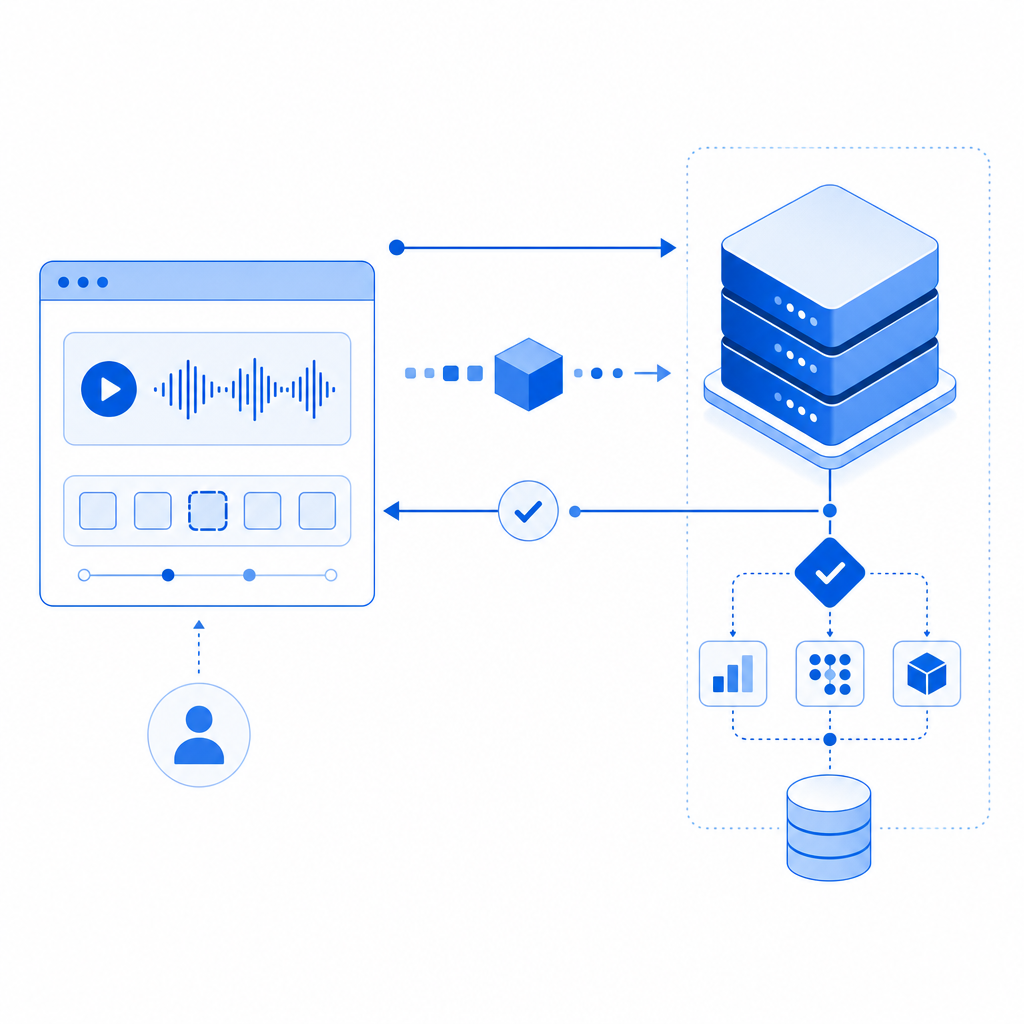
- Use server-side token validation to verify submitted answers via secure API endpoints.
- Regularly update audio generation algorithms to stay ahead of machine learning advancements targeting CAPTCHA solving.
Example pseudocode illustrating server-side validation:
// Client sends user audio CAPTCHA response with pass_token and IP
POST https://apiv1.captcha.la/v1/validate
Headers: X-App-Key, X-App-Secret
Body: {
  "pass_token": "...",
  "client_ip": "203.0.113.12",
  "user_response": "5 3 8 1"
}

// Server verifies token and checks if user_response matches challenge response
if (validateToken(pass_token) && matchResponse(user_response)) {
  return { success: true }
} else {
  return { success: false }
}
Implementing Audio CAPTCHA with CaptchaLa
CaptchaLa provides a flexible, developer-friendly audio CAPTCHA solution as part of its broader bot-defense platform. Key features include:
- Native SDKs for Web (JavaScript, Vue, React), iOS, Android, Flutter, Electron.
- Server SDKs like
captchala-phpandcaptchala-gofor seamless backend integration. - An easy-to-load script at
https://cdn.captcha-cdn.net/captchala-loader.jsthat handles challenge rendering with audio options. - Validation endpoints with secure token verification to prevent spoofing.
- A free tier accommodating 1000 monthly requests, scaling up to business needs efficiently.
Compared to competitors such as Google reCAPTCHA or hCaptcha, CaptchaLa emphasizes privacy by default supporting first-party data handling, making it appealing for organizations mindful of user data.
Conclusion: When and Why to Use Audio CAPTCHA
Audio CAPTCHA remains a critical component for inclusive bot defense. It:
- Provides accessible verification for users with visual impairments.
- Maintains security where visual CAPTCHA fails or is inconvenient.
- Adds a layer of complexity that leverages human auditory skills beyond machine learning reach.
While invisible CAPTCHA methods are gaining ground, audio CAPTCHA is unlikely to disappear due to regulatory requirements and usability demands.
If you’re exploring CAPTCHA options for your app or website, consider integrating an audio CAPTCHA either as a standalone or fallback challenge. Tools like CaptchaLa make implementation straightforward with comprehensive SDKs and flexible pricing plans suited to various use cases.
For more detailed technical guidance and pricing options, visit the CaptchaLa documentation and pricing page. Harness audio CAPTCHA to build secure, accessible user verification into your bot defense strategy.