
Bot detection is a game of chess. Every defensive move a system makes teaches sophisticated bots how to respond, and every bot improvement forces defenders to adapt their signals and challenges. Understanding this dynamic — rather than treating bot defense as a one-time configuration — is what separates sites that stay protected from those that get scraped, spammed, or credential-stuffed.
The term "bot detector chess" captures this adversarial back-and-forth well. Attackers study challenge mechanisms, reverse-engineer scoring logic, and evolve their tooling. Defenders layer signals, randomize behavior, and raise the cost of automation. Neither side plays a static game.
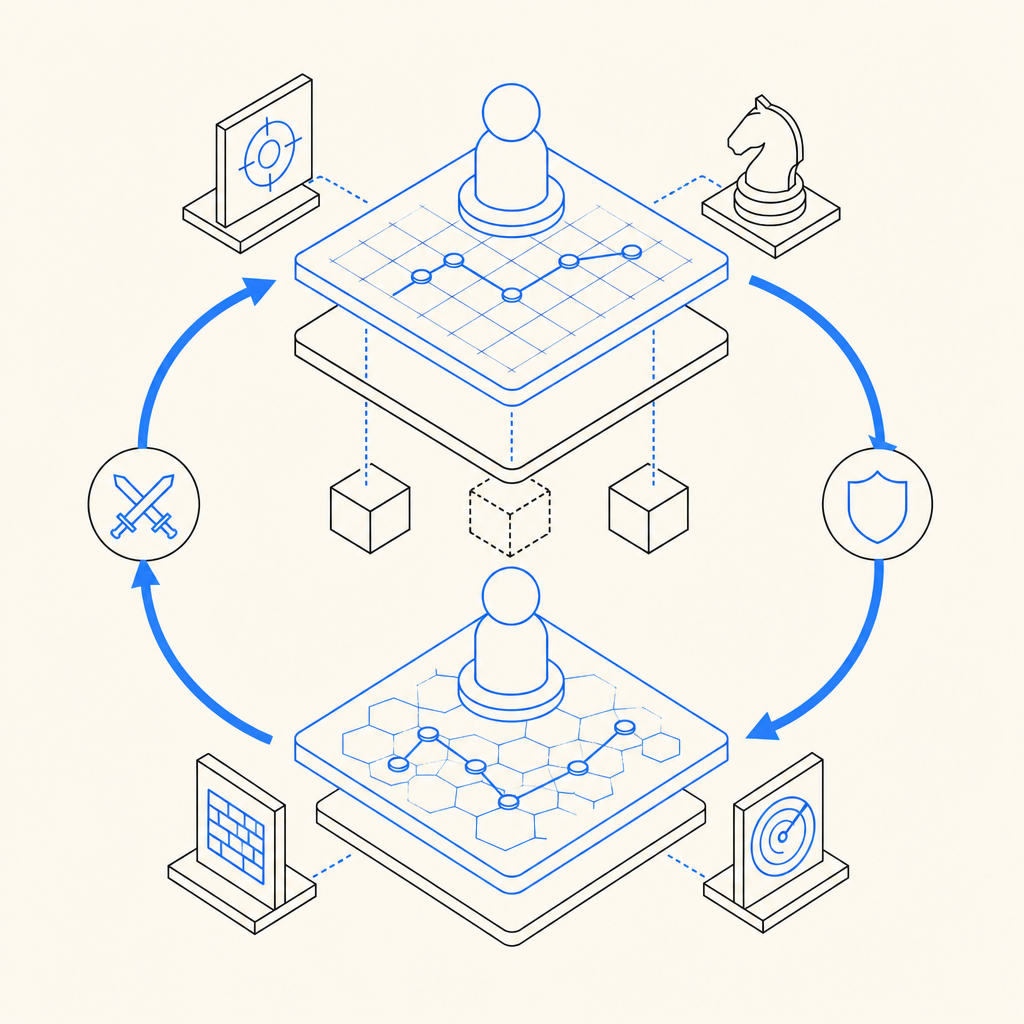
How the Bot–Defender Game Actually Plays
At its core, bot detection works by collecting behavioral and environmental signals that are expensive or difficult for bots to fake simultaneously. A few of the most important battlegrounds:
Mouse and Touch Dynamics
Human pointer movement is noisy — slight tremors, micro-corrections, non-linear acceleration. Early bots used perfectly linear paths. Modern headless browsers inject synthetic randomness, but timing distributions and pressure curves still diverge from real users in statistically measurable ways.
Browser Environment Fingerprinting
Headless Chrome without careful configuration leaks identifiers: navigator properties, WebGL renderer strings, missing browser plugins, and anomalous timing on canvas operations. The cat-and-mouse here is constant; tools like puppeteer-extra-plugin-stealth specifically exist to patch these signals, which in turn forces detectors to look deeper.
IP Reputation and Network Signals
Datacenter ASNs, Tor exit nodes, and residential proxy pools are well-known signals. Residential proxies have made this dimension harder — a request may genuinely originate from a home ISP while still being bot-driven. This is why IP signals alone are insufficient and must be combined with behavioral layers.
Challenge Interaction Timing
When a CAPTCHA challenge is presented, the time-to-completion, error rate, and retry pattern reveal automation. A bot completing a click CAPTCHA in 80ms with 100% accuracy looks nothing like a human who takes 1.2 seconds, occasionally clicks slightly outside the target, and sometimes retries.
The Signal Stacking Approach
No single signal is a reliable bot detector. The chess analogy holds: each individual piece has limited power; winning comes from coordination. A robust detection stack typically combines:
- Client-side behavioral telemetry — mouse/touch/keyboard entropy collected before any challenge is shown
- Device and environment fingerprinting — browser consistency checks, WebGL, audio context, font enumeration
- Network reputation scoring — ASN classification, IP velocity, proxy detection
- Challenge interaction analysis — how a user engages with the visual or cognitive puzzle
- Server-side token validation — cryptographic proof that a verified client session produced the token
This last point matters architecturally. When CaptchaLa issues a pass_token on the client side, your server must validate it before trusting any downstream action. The validation call is a simple POST:
// Server-side token validation (Node.js example)
const response = await fetch('https://apiv1.captcha.la/v1/validate', {
  method: 'POST',
  headers: {
    'Content-Type': 'application/json',
    'X-App-Key': process.env.CAPTCHALA_APP_KEY,
    'X-App-Secret': process.env.CAPTCHALA_APP_SECRET,
  },
  body: JSON.stringify({
    pass_token: req.body.captchaToken,
    client_ip: req.ip,
  }),
});
const result = await response.json();
// result.success === true means a real human session produced this token
Skipping server-side validation is one of the most common implementation mistakes — it lets attackers replay tokens or forge submissions entirely.
Comparing Common Bot Defense Approaches
Different CAPTCHA and bot-defense services make different trade-offs. Here's an honest comparison of the major options defenders evaluate:
| Service | Primary signal model | Invisible/passive option | First-party data | Self-hosted option |
|---|---|---|---|---|
| reCAPTCHA v3 | Behavioral + Google network | Yes (score-based) | No (Google collects) | No |
| hCaptcha | Visual challenge + behavioral | Partial | No | No |
| Cloudflare Turnstile | Browser challenge + CF network | Yes | No (CF collects) | No |
| CaptchaLa | Behavioral + challenge interaction | Challenge-based | Yes | No |
The "first-party data" column matters for privacy-sensitive applications. reCAPTCHA, hCaptcha, and Turnstile all route signal data through their own networks, which can create GDPR and CCPA compliance questions depending on your user base. CaptchaLa operates on a first-party data model — signals stay between your application and CaptchaLa's validation infrastructure, not pooled into a broader surveillance network.
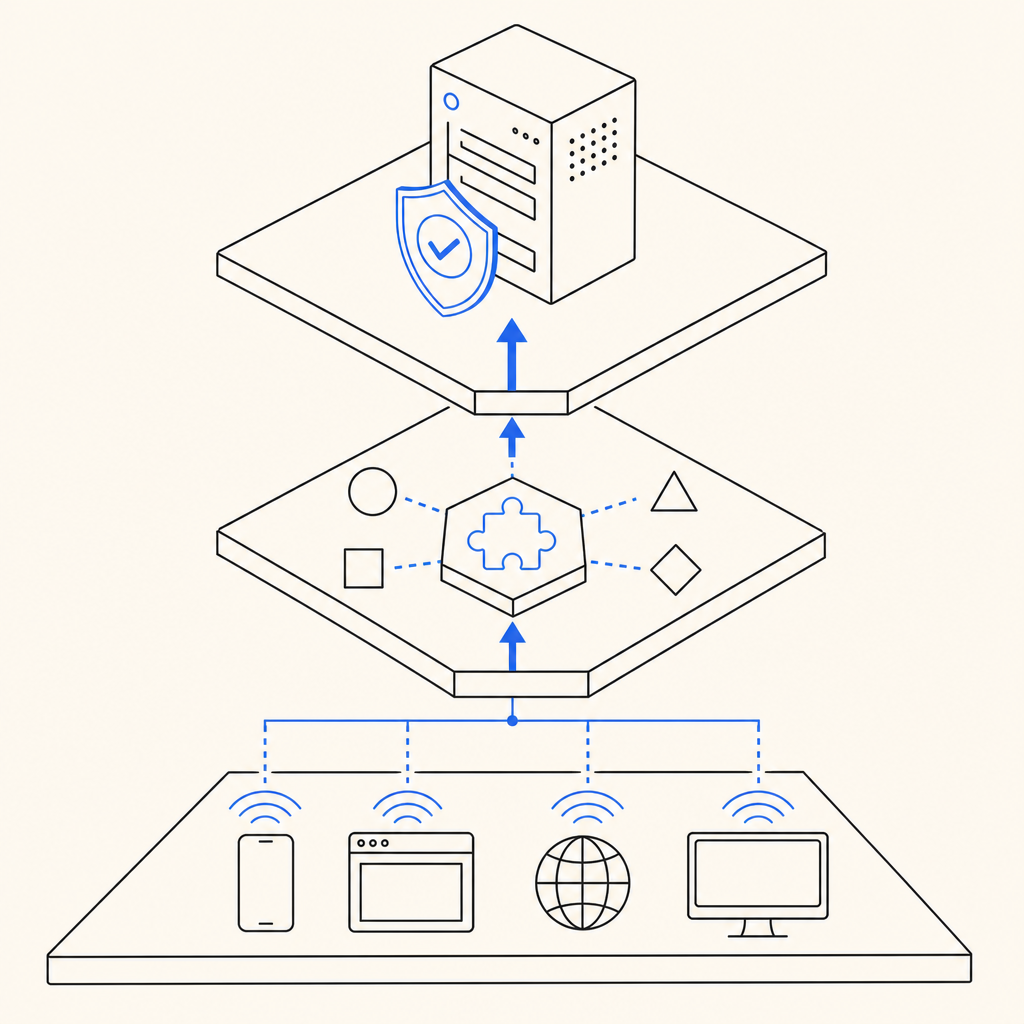
The Server-Token Pattern for Non-Human Workflows
One sophisticated pattern defenders use for trusted server-to-server or testing workflows is issuing a challenge token from the server side directly — bypassing the client entirely for scenarios where you control both ends. CaptchaLa supports this via POST https://apiv1.captcha.la/v1/server/challenge/issue. This is useful for load testing your own forms without having to manually complete challenges, or for internal automation that legitimately needs to interact with protected endpoints. It's a capability that reinforces the defender's control rather than creating a bypass vector.
Raising the Cost of Automation
The goal of bot detection isn't perfect elimination — it's making automation expensive enough that attackers move to softer targets. Each layer you add increases:
- Compute cost — solving visual challenges or generating convincing behavioral traces takes time and resources
- Infrastructure cost — rotating residential proxies, maintaining fresh browser environments, and managing detection feedback loops all cost money
- Latency — real-time challenge solving, whether manual (CAPTCHA farms) or automated, adds delay that breaks many time-sensitive attack patterns
A well-implemented detection stack running on CaptchaLa with server-side validation, behavioral analysis, and appropriate challenge friction shifts the economics against most opportunistic bots. Sophisticated targeted attacks require more, but the vast majority of bot traffic is cost-sensitive and will move on.
Native SDK support across Web (JS, React, Vue), iOS, Android, Flutter, and Electron means you can apply consistent protection across every surface an attacker might probe — not just your main web form. See the docs for integration guides across each platform.
Where to Go Next
If you're evaluating bot detection options or auditing an existing implementation, the two most impactful things to check are whether you're validating tokens server-side and whether your signal collection spans both behavioral and environmental dimensions. Start with the docs for a complete integration walkthrough, or review pricing — the free tier covers 1,000 verifications per month, which is enough to test a full integration before committing to anything.