
Bot detection using AI leverages artificial intelligence techniques to identify and block automated scripts and malicious bots more effectively than traditional rule-based systems. By analyzing behavioral patterns, network attributes, and client metadata, AI-powered defenses can adapt in real time to new threats, minimizing false positives and maintaining a smooth user experience.
The Limitations of Traditional Bot Detection Methods
Before AI-based solutions, bot detection mostly relied on static rules and heuristics such as IP blacklists, rate limiting, and simple fingerprinting. Though still useful, these methods struggle to keep pace with the rapidly evolving tactics of bot developers who use headless browsers, proxy networks, and machine learning themselves to mimic human behavior.
For example, traditional CAPTCHAs like image puzzles or distorted text are often bypassed by sophisticated automated solvers. Furthermore, static rules can generate many false positives, frustrating legitimate users and causing revenue loss.
AI bot detection systems overcome these hurdles by dynamically learning from interaction data, enabling more nuanced distinctions between bots and humans.
How AI Enhances Bot Detection Accuracy
AI models use various inputs to assess user interactions:
- Behavioral biometrics: Tracking mouse movements, keystroke dynamics, scrolling patterns, and click timing to detect unnatural automation.
- Network signals: Analyzing IP reputation, device fingerprinting, and request anomalies.
- Contextual data: Considering geographic location, time of access, user agent strings, and session history.
Machine learning algorithms, particularly supervised classifiers and anomaly detectors, train on large datasets of known bot and legitimate traffic. The models continuously update to recognize emerging attack patterns without manual rule changes.
Common AI Techniques in Bot Detection
| Technique | Description | Benefit |
|---|---|---|
| Behavioral analysis | Evaluates user interaction patterns | Distinguishes bots from humans with subtlety |
| Anomaly detection | Flags unusual request volumes or activity patterns | Identifies new or unknown bot variants |
| Device and browser fingerprinting | Collects non-intrusive hardware/software attributes | Helps track repeat offenders across sessions |
| Natural language processing | Analyzes text input to detect scripted or automated behavior | Detects fake account creation, comment spam |
AI’s adaptive learning also reduces dependency on CAPTCHAs, improving accessibility and reducing friction for genuine users.

Comparing AI Bot Detection Solutions: CaptchaLa and Competitors
Several well-known services have integrated AI techniques into their bot defense offerings:
| Feature | CaptchaLa | reCAPTCHA v3 | hCaptcha | Cloudflare Turnstile |
|---|---|---|---|---|
| AI-driven risk scoring | Yes, with behavioral and network analysis | Yes, with risk score based on interaction | Yes, machine learning assisted | Yes, with privacy-focused heuristics |
| CAPTCHA challenges | Adaptive, optionally invisible | Invisible reCAPTCHA option | Customizable image/audio tasks | Minimal user challenges |
| SDK support | Web (JS/Vue/React), iOS, Android, Flutter, Electron; server libraries for PHP, Go | Web and mobile SDKs | Web, mobile SDKs | Web-focused |
| Pricing tiers | Free 1000/mo, Pro 50K-200K, Business 1M monthly | Free with usage limits, Enterprise | Usage-based pricing | Bundled with Cloudflare plans |
| First-party data focus | Yes, no 3rd party tracking | Uses Google ecosystem data | Mix of proprietary and 3rd party | Privacy-centric approach |
CaptchaLa offers straightforward integration with native SDKs tailored for modern development frameworks, focusing on first-party data privacy with robust AI-powered scoring.
Implementing AI-Based Bot Detection with CaptchaLa
Getting started with bot detection using AI involves integrating client and server SDKs that interact with CaptchaLa's APIs:
- Choose your SDKs - Select from web SDKs in JavaScript, Vue, React, or native SDKs for iOS, Android, Flutter, or Electron.
- Issue a challenge token - Use the server SDK to request a challenge token before user interaction.
- Validate interactions - Upon user action, send a validation request with the pass token and client IP to the CaptchaLa API.
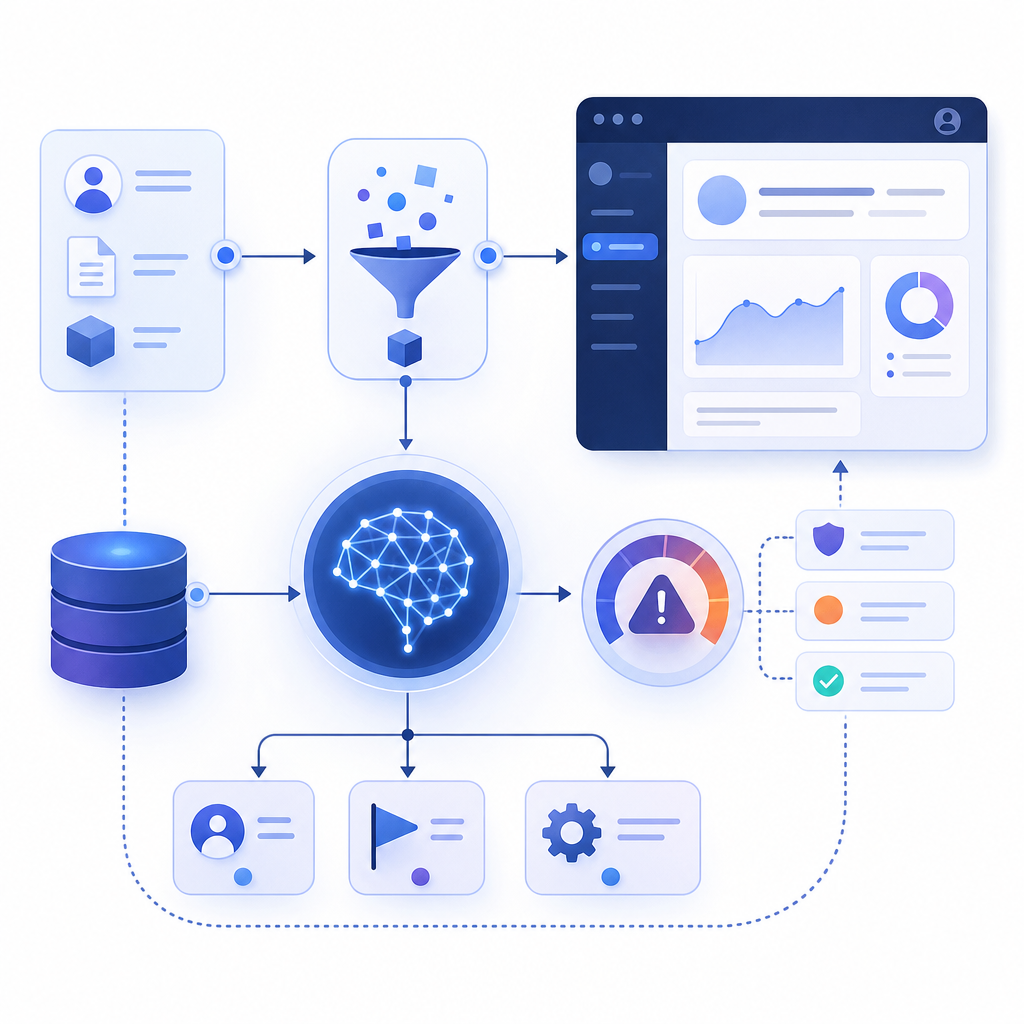
- Interpret risk scores - Analyze the AI-generated score to decide whether to allow, flag, or block the request.
- Adjust thresholds dynamically - Optimize sensitivity based on traffic patterns to balance security and user experience.
// Example: Validate a CAPTCHA token server-side with CaptchaLa API
const validateCaptcha = async (passToken, clientIP) => {
  const response = await fetch('https://apiv1.captcha.la/v1/validate', {
    method: 'POST',
    headers: {
      'X-App-Key': 'your-app-key',
      'X-App-Secret': 'your-app-secret',
      'Content-Type': 'application/json'
    },
    body: JSON.stringify({ pass_token: passToken, client_ip: clientIP })
  });
  const result = await response.json();
  return result.success; // Boolean indicating bot or human
};
This approach leverages AI analysis within the service while keeping your backend logic simple and performant.
Balancing Security and User Experience
One key advantage of AI-powered bot detection is reducing intrusive user challenges. While classical CAPTCHAs interrupt users with puzzles, AI risk scores allow systems to block high-risk traffic silently and only challenge borderline cases.
CaptchaLa supports adaptive risk thresholds and challenge presentation, enabling a seamless yet secure experience. This is increasingly important for mobile apps and international audiences, with UI available in eight languages and flexible client SDKs for various environments.
Conclusion
Bot detection using AI represents a practical evolution beyond rigid rule-based defenses. By combining behavioral analysis, device fingerprinting, and network intelligence, AI systems can identify sophisticated bots while minimizing user friction.
Services like CaptchaLa provide accessible AI-driven bot detection solutions with extensive SDK support and a privacy-conscious approach. Whether for e-commerce, SaaS, or content platforms, adopting AI bot defense helps maintain trust, reduce fraud, and improve customer satisfaction.
Curious to learn more about how AI powers your bot defense? Check out CaptchaLa’s documentation or explore detailed pricing plans to find the right fit for your needs.